12 desert animals, and how each one solved water
Desert animals are not defined by heat, and neither are deserts. Antarctica is a desert. What defines one is water, or the near absence of it: under 250 millimeters of rain a year, arriving unpredictably, evaporating fast.
Every desert animal is a different answer to that single problem. Some never drink. Some let their bodies get dangerously hot on purpose. Some simply refuse to be awake when the sun is up. Here are 12 of them, grouped by the solution rather than the continent.
The ones that never drink at all
The kangaroo rat is the extreme case. It lives in the deserts of the American Southwest and can go its entire life without drinking. It manufactures water metabolically, as a by-product of breaking down the dry seeds it eats, and then refuses to waste any of it: its kidneys produce urine several times more concentrated than ours, its nasal passages recapture moisture from its own breath, and it plugs its burrow during the day to keep the humidity in.
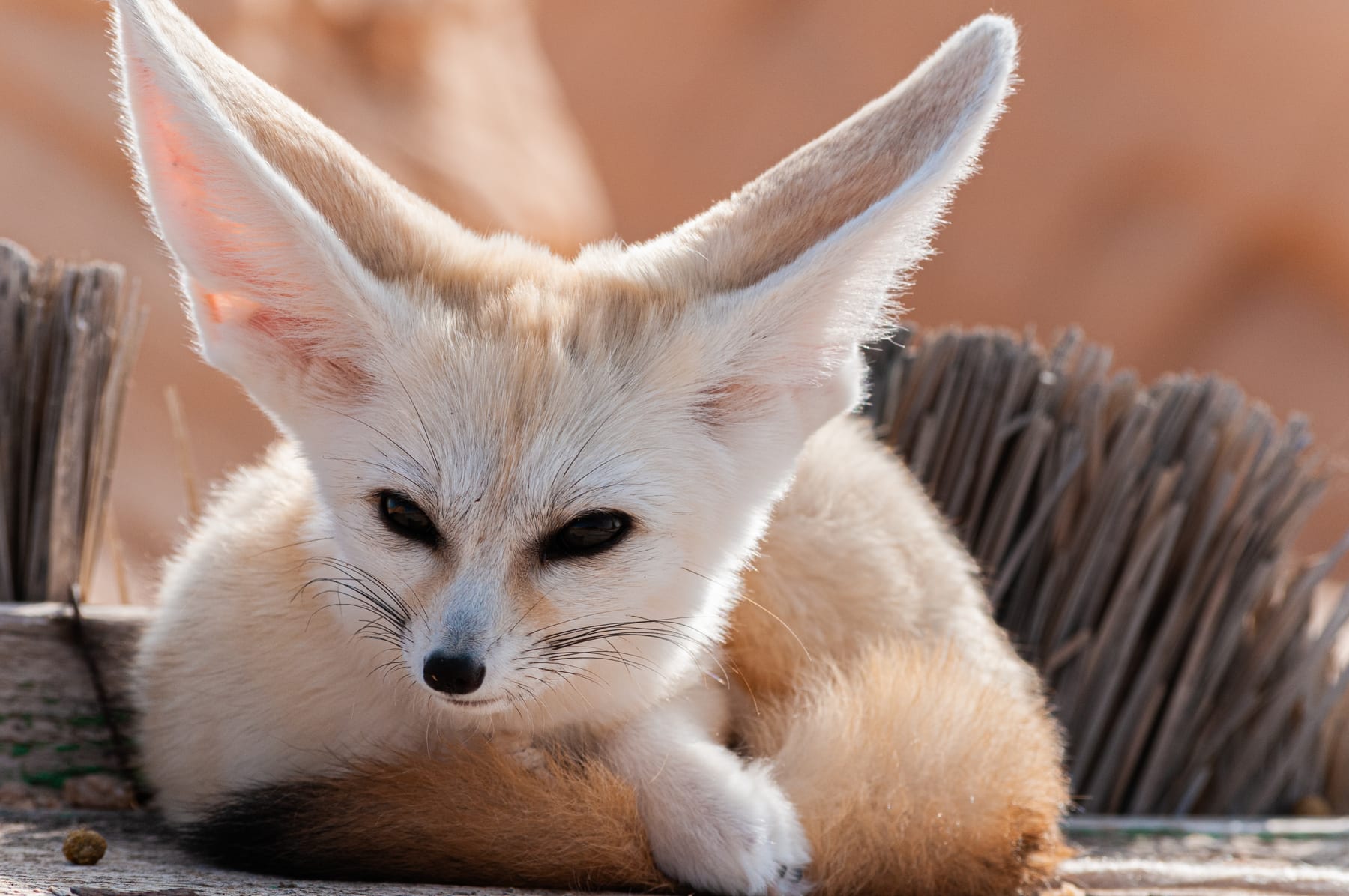
The fennec fox takes a related approach with better ears. It is the smallest fox in the world and those enormous ears are radiators, dumping heat through a dense network of blood vessels near the skin. It gets most of its water from prey. The arctic fox is the same idea run backwards, with ears and muzzle shrunk to almost nothing to hold heat in, which is a neat demonstration that the shape of an animal is mostly an argument about temperature.
The addax is a pale antelope of the Sahara that gets its water from desert grasses and can survive without drinking. It is also Critically Endangered on the IUCN Red List, with fewer than 100 believed left in the wild, which makes it one of the most threatened large mammals on Earth and one of the least discussed.
The ones that let themselves overheat
This is the counterintuitive strategy, and it is more common than it sounds.
The Arabian oryx lets its body temperature climb through the day rather than sweating to hold it down. Sweating costs water. Storing the heat and shedding it overnight costs nothing, and a specialized network of blood vessels keeps the brain cooler than the rest of the body while the core runs hot.
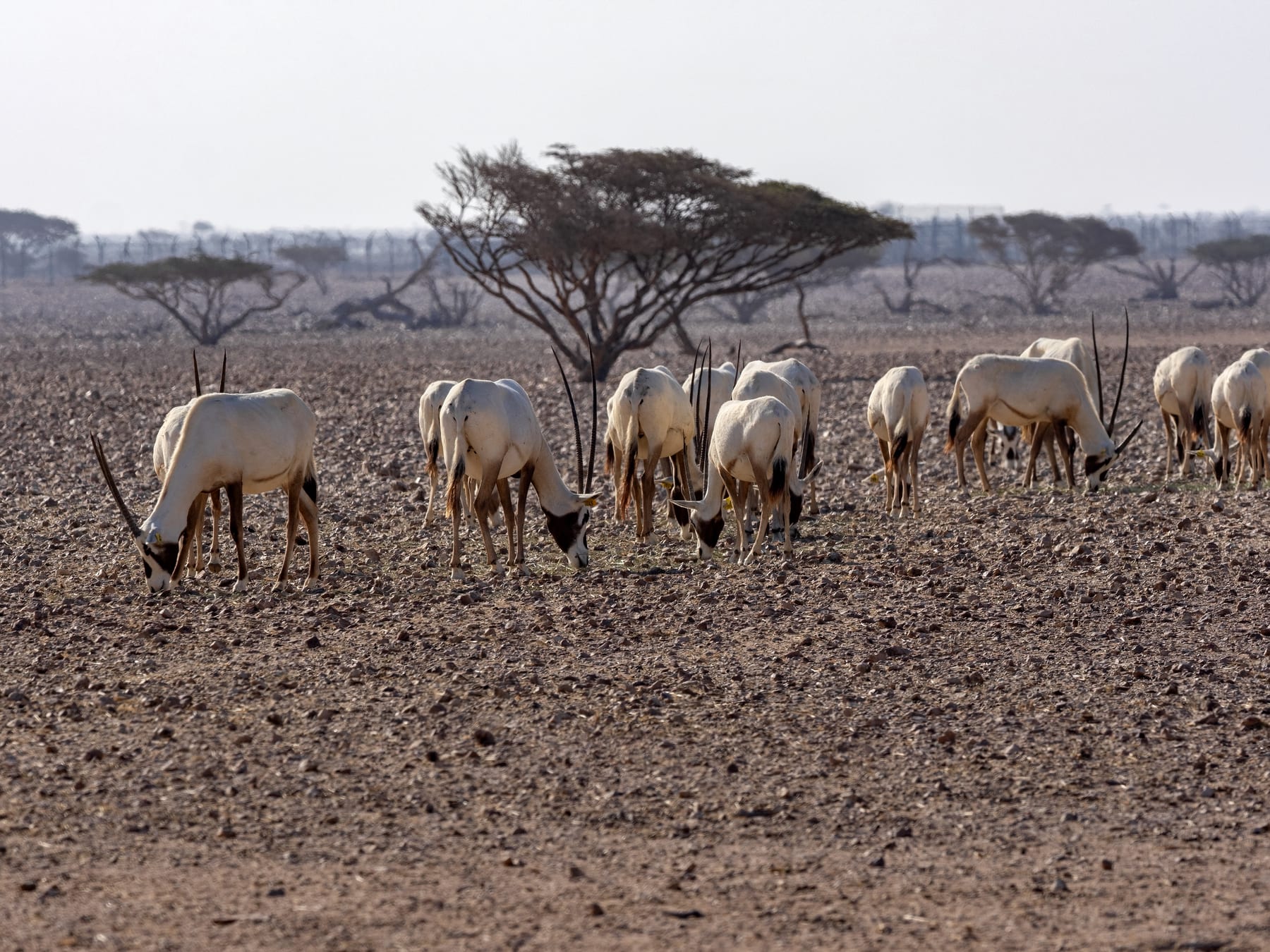
The oryx is also the best recovery story in this article. It was declared Extinct in the Wild in 1972. A captive breeding program built from a handful of animals put it back, and the Red List moved it to Vulnerable in 2011, the first animal ever to recover from Extinct in the Wild to that category.
The dromedary camel does the same trick at scale, swinging its body temperature by six degrees across a day. The hump is fat, not water, though metabolizing fat does release some. What actually lets a camel drink 100 liters in ten minutes without its blood cells bursting is the unusual oval shape of those cells.
The ones that avoid the problem entirely
The simplest solution to a hot desert is to not be in it.
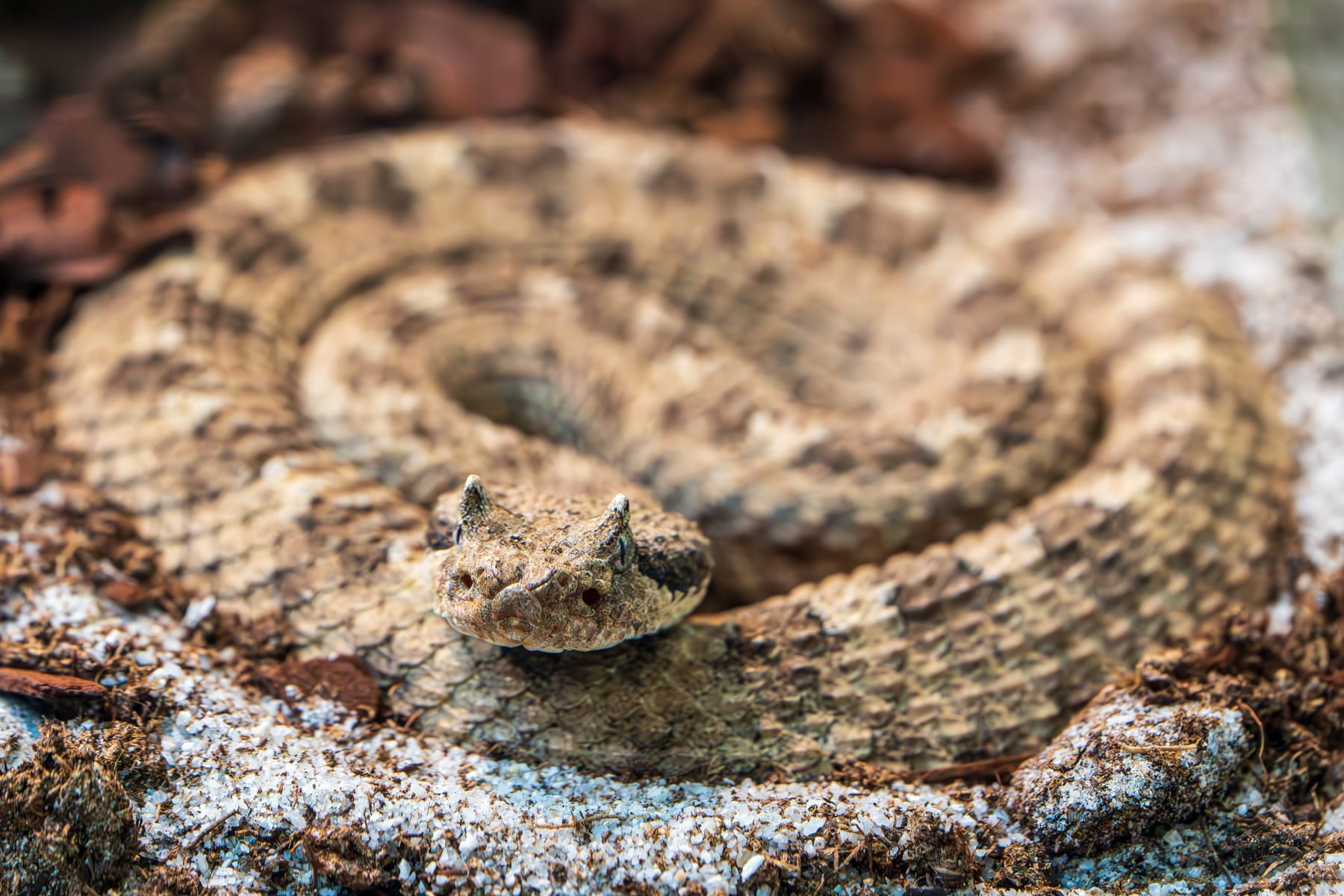
The sidewinder moves the way it does for a specific reason. Throwing loops of its body sideways keeps only two small points in contact with sand hot enough to kill it, and it hunts at night regardless.
The desert tortoise spends up to 95% of its life underground and can store water in its bladder for a year, reabsorbing it as needed. It is threatened across the Mojave, largely because off-road vehicles and development collapse the burrows it depends on.
The spadefoot toad is the strangest of them. It waits out drought buried in a cocoon of its own shed skin, sometimes for years, then emerges within minutes of the first heavy rain, breeds in a temporary pool, and produces tadpoles that develop in as little as eight days before the puddle dries.
The social ones
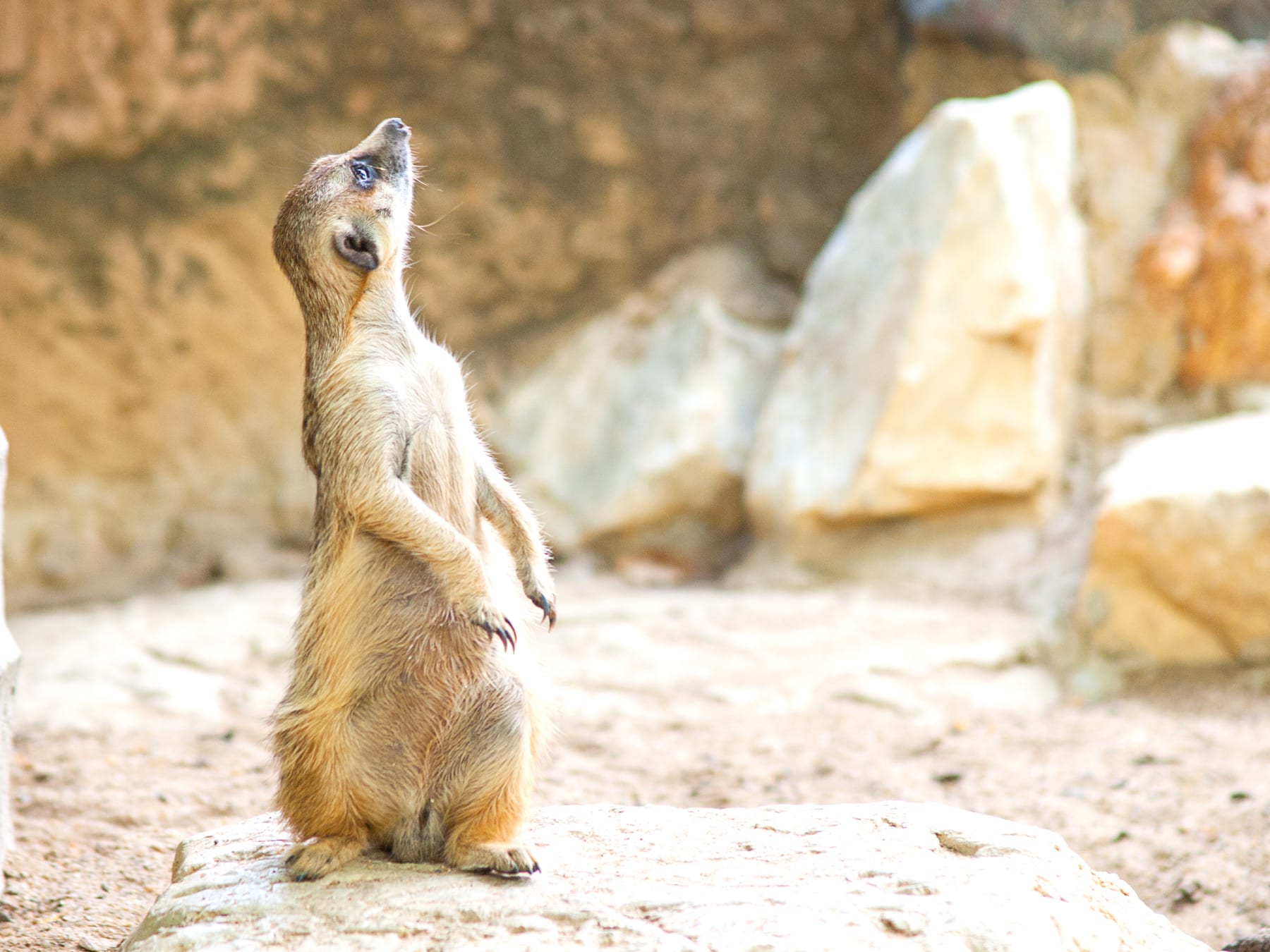
The meerkat solves the desert with other meerkats. A group shares burrows, takes turns on sentry duty, and coordinates foraging, which is why one is almost always standing upright while the rest dig. That sentry system lets the group feed in open ground where a solitary animal would be hunted, and the burrow itself is the real adaptation: a meter down, the Kalahari is 20 degrees cooler than the surface.
The Cape ground squirrel carries its own shade, holding its tail over its back like a parasol and adjusting the angle as the sun moves.
The desert predators
The cheetah is not usually filed under desert wildlife, but a small and genetically distinct population lives in the central Sahara, ranging enormously to find prey and hunting more at night than its savanna relatives do. There may be fewer than 250 of them. Cheetah Conservation Fund works across the species' range on the conflict with farmers that kills most cheetahs.
The snow leopard lives in cold desert, the arid high mountains of Central Asia where precipitation is low and mostly locked up as snow. Snow Leopard Trust runs the livestock insurance schemes that make a snow leopard worth more alive than dead to the herders sharing its range.
The red kangaroo dominates arid Australia and licks its forearms to cool by evaporation, which sounds undignified and works well. It also has a reproductive trick suited to unpredictable rain: a female can hold an embryo in suspended development until conditions improve.
What actually threatens desert animals
Deserts border grassland almost everywhere they occur, and the boundary moves. Deserts look like the one habitat too hostile to be worth taking, which is exactly why the threats to them get so little attention.
Water extraction. Desert species are built around scarce, predictable water sources. Pumping groundwater for agriculture removes the springs and seeps that everything is organized around, and the animal that never drinks still depends on plants that do.
Hunting with vehicles. The addax and the Saharan cheetah were not undone by climate. They were undone by four-wheel drives and rifles reaching country that used to be unreachable on foot.
Solar and mineral development. Desert land reads as empty and therefore free, and utility-scale projects are frequently sited on exactly the flat, open ground that tortoises and ground-nesting birds need.
Off-road recreation. In the Mojave this is a leading cause of desert tortoise mortality, because a collapsed burrow kills an animal that is not even visible when the vehicle passes over it. The US Fish and Wildlife Service manages the recovery plan.
The Sahara Conservation program works on the addax and the scimitar-horned oryx specifically, and the scimitar-horned oryx recovery is the encouraging half of that story: declared Extinct in the Wild, it was reintroduced to Chad from captive stock and downgraded to Endangered in 2023.
The lesson the desert keeps repeating
Read the list again and one thing separates the recoveries from the losses, and it is not how well adapted the animal was.
The Arabian oryx and the scimitar-horned oryx came back because somebody maintained a captive population for decades and then funded a reintroduction into protected range. The addax and the Saharan cheetah are nearly gone because nobody did that at the same scale, in the same window. Every animal here has already solved the hard problem of living without water. None of them evolved a defense against a truck.