How 14 grassland animals share the same grass without starving
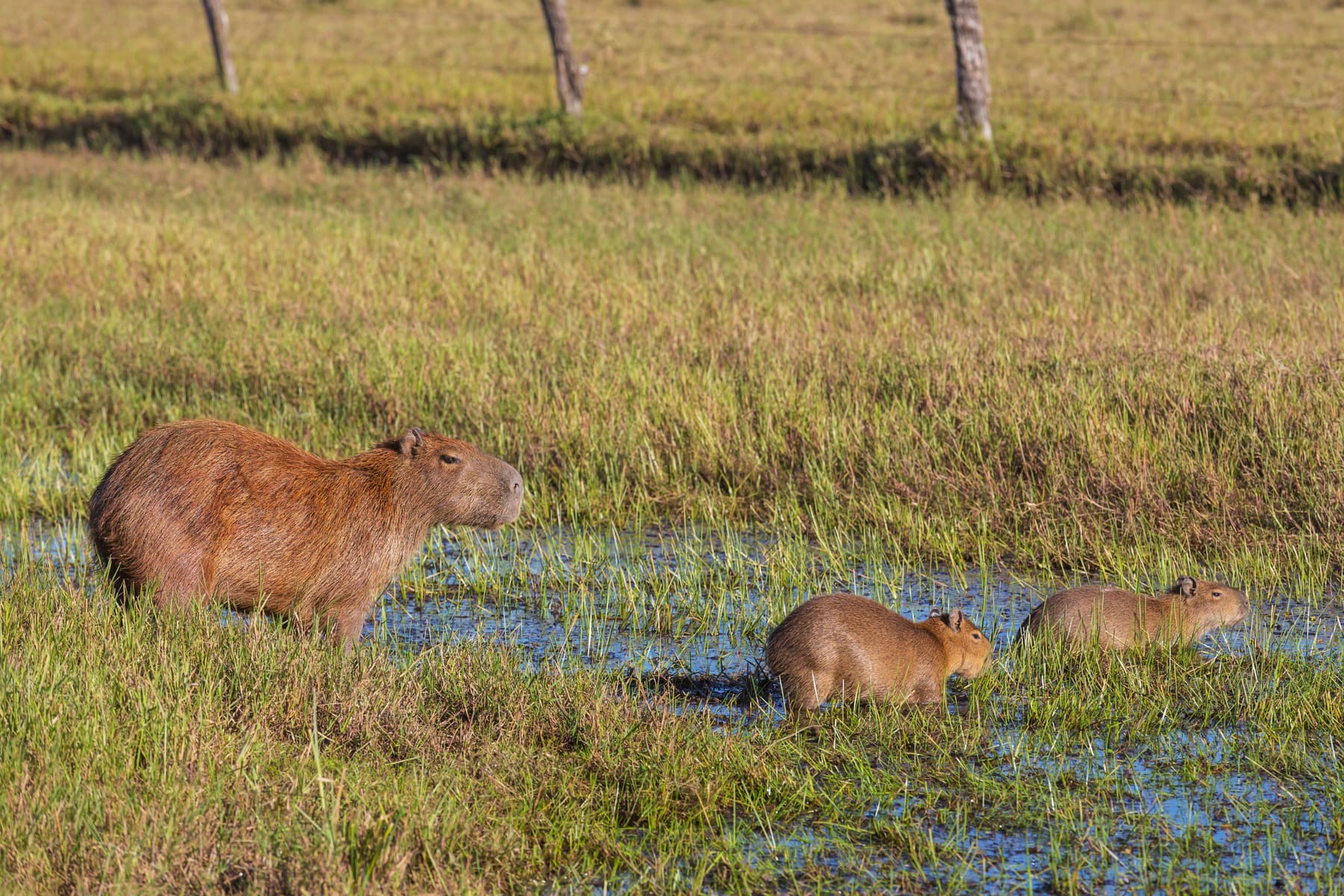
Grassland animals live in the most converted habitat on Earth. Grasslands cover roughly a quarter of the planet's land surface and hold the largest gatherings of large animals left anywhere. They are also the habitat most completely converted by people, because flat land with deep soil and no trees is exactly what agriculture wants.
The interesting thing about grassland animals is not that they eat grass. It is how they avoid eating the same grass as each other.
How grazers divide one plant
On an African savanna, a dozen large herbivores feed in the same square kilometer without starving one another out. They manage it by partitioning the vegetation with a precision that took millions of years to settle.
Zebras go first, eating the tough upper stems that other animals cannot digest. Wildebeest follow, taking the leafier middle layer the zebras exposed. Gazelles come last, cropping the short new growth that the wildebeest triggered. Each species makes the grass edible for the next, one link in the wider set of animals these landscapes hold, which is why the great migrations move in that order rather than at random.
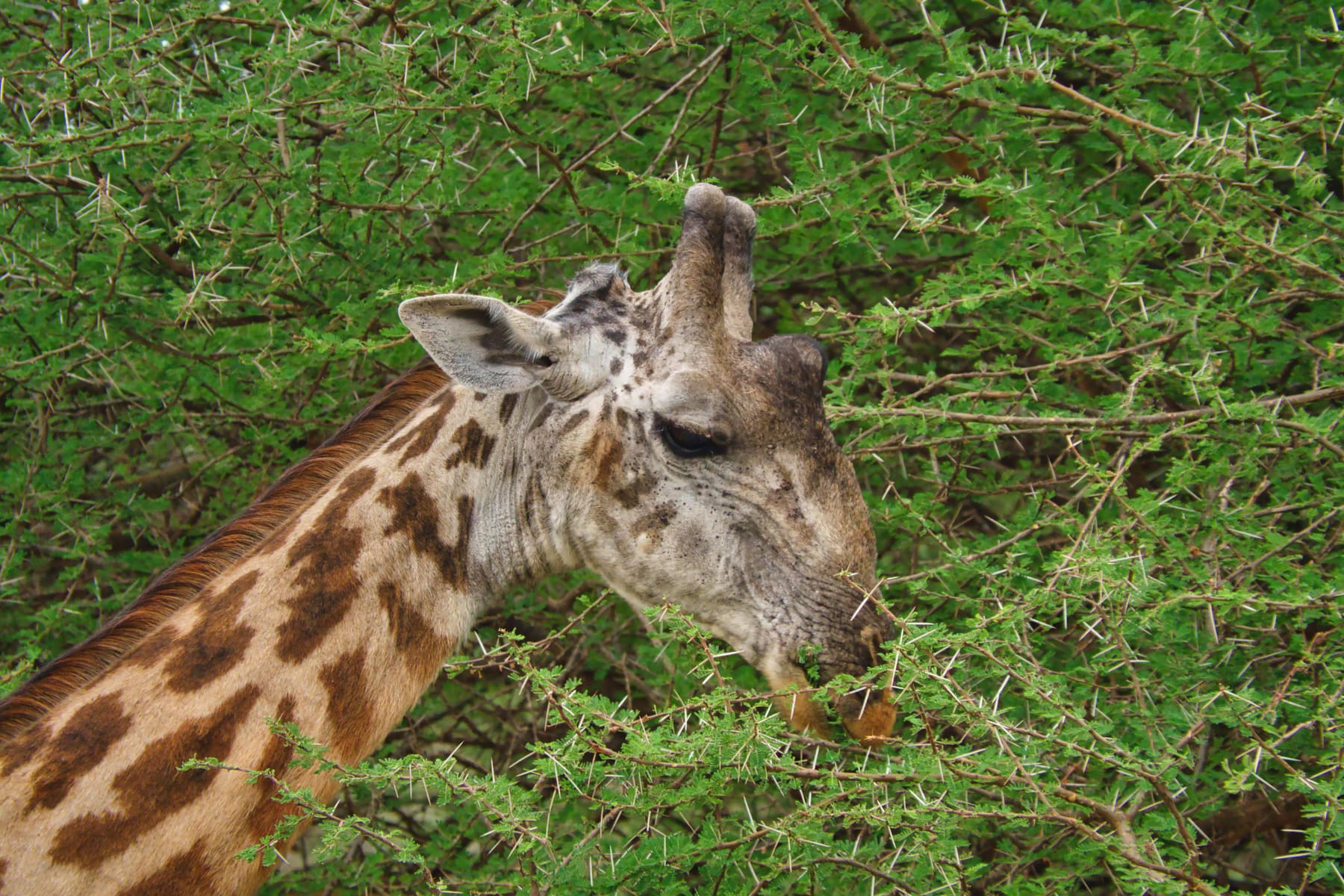
Above them, browsers work a different layer entirely. The giraffe feeds five meters up in acacia canopies nothing else can reach, and it is Vulnerable, having declined quietly for decades while attention went to more famous animals. The black rhinoceros uses a hooked lip to browse woody shrubs, while the white rhinoceros uses a wide square lip to graze grass, which is the difference the names should have described.
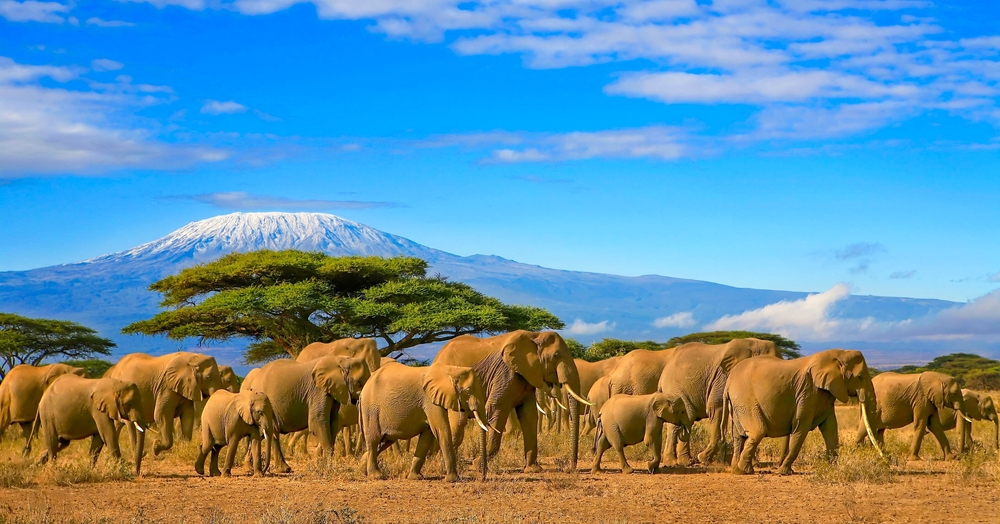
The African savanna elephant does something none of them do: it pushes over trees. Grassland stays grassland partly because elephants keep knocking down the saplings that would otherwise turn it into woodland.
The predators
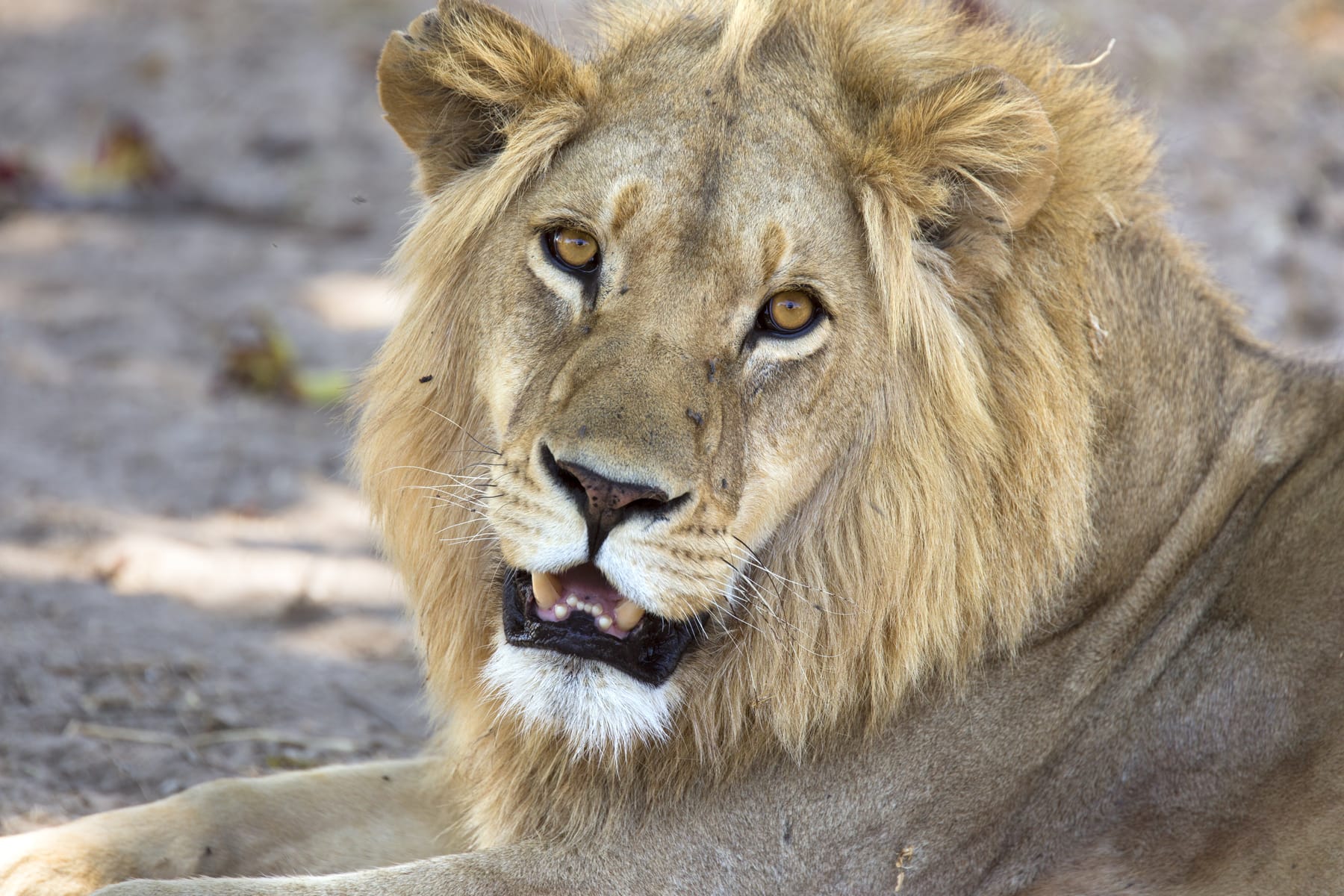
The lion is Vulnerable and the only cat that lives in permanent social groups, which is a grassland adaptation: open country favors cooperative hunting of large prey.
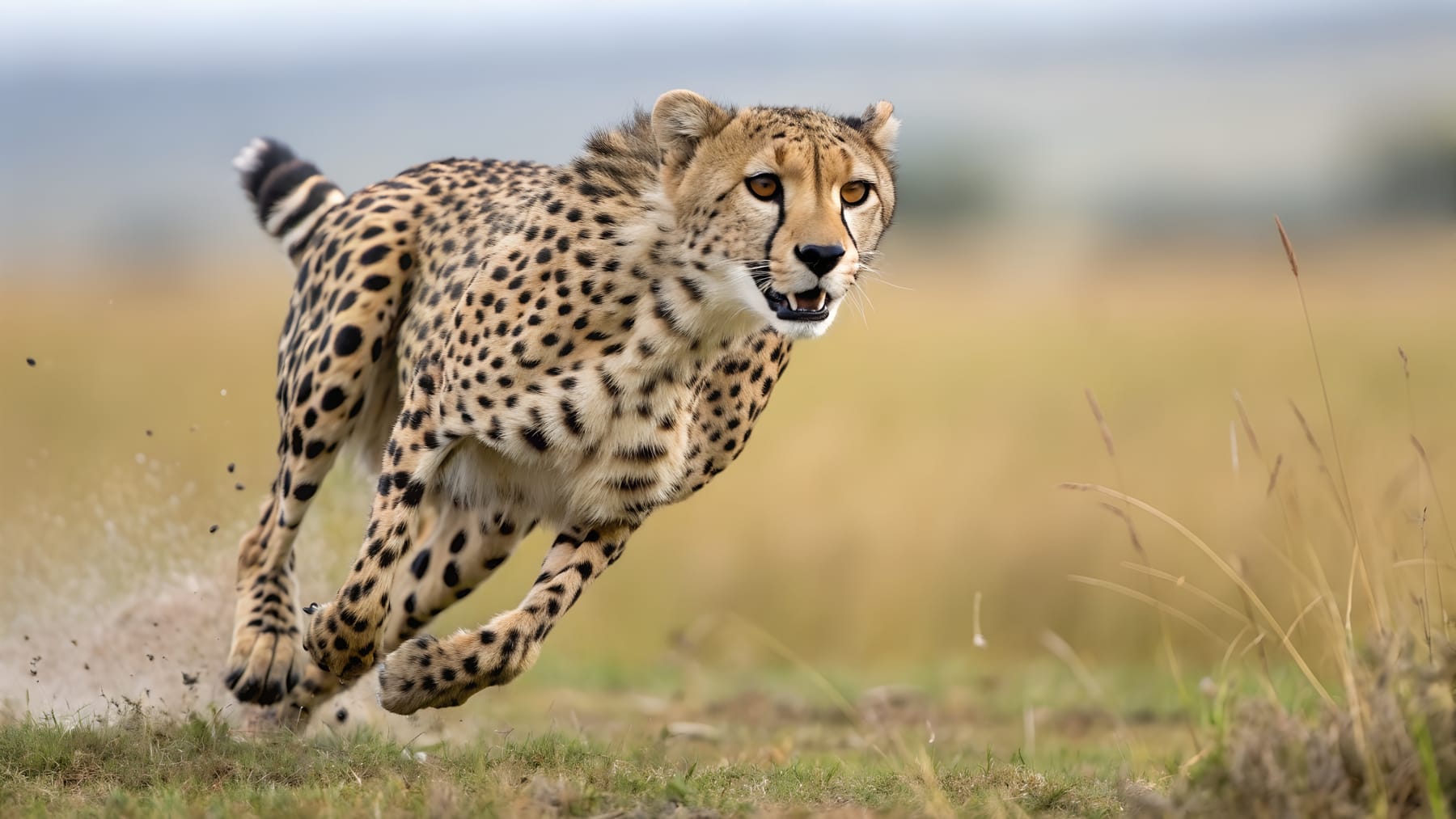
The cheetah is Vulnerable and solved the same landscape a different way, trading strength for a 100 kilometer per hour sprint. It hunts in daylight specifically to avoid lions and hyenas, which take its kills, and that daylight habit is one of several things separating it from the leopard it is most often confused with. Cheetah Conservation Fund and Panthera both work on the conflict with livestock owners that kills most cheetahs.
The African wild dog is Endangered and is the most successful hunter of the three, with success rates far above lions, because it runs prey down cooperatively over distance. That strategy needs enormous territory, and enormous territory is exactly what fragmented grassland no longer provides.
The meerkat is Least Concern and works the other end of the size range, living in cooperative groups where individuals take turns standing sentry while the rest forage.
The animals that make the grass grow
Grazing sounds destructive and is not. Grassland and large herbivores evolved together, and the plants are built for it.
Grasses grow from the base rather than the tip, which means an animal cropping the top removes leaf without killing the plant, and the plant regrows immediately. Trees cannot do this, which is a large part of why heavy grazing produces grassland rather than woodland. Grazing also stimulates growth: cropped grass puts out new shoots that are more nutritious than the old growth, which is why herds return to recently grazed ground.
Trampling matters too. Hooves break soil crust and press seed into the ground, and dung returns nutrients. Remove the herds entirely and grassland productivity falls.
This is why fencing an area and excluding animals is not automatically conservation, and why some of the best-preserved grassland on Earth is grazed land. The distinction that matters is not grazed against ungrazed but moving against stationary. Wild herds move constantly and give ground time to recover. Fenced livestock at fixed density does not, which is what turns grassland into bare soil.
Grasslands beyond Africa
The savanna dominates the conversation, but grassland is a global biome.
The American bison is Near Threatened and is the closest thing North America has to the African megafauna story. Tens of millions were reduced to a few hundred animals by the 1880s, and the recovery to roughly 30,000 wild bison is one of the earliest conservation successes anywhere. Bison graze in a way that maintains prairie: they wallow, creating depressions that hold water, and they avoid the wildflowers cattle eat.
In Asia, the Indian rhinoceros is Vulnerable and lives in tall floodplain grassland rather than savanna, in grass that grows well over the height of a person. International Rhino Foundation works across its range.
Why grassland is the most converted habitat on Earth
Rainforest loss gets the coverage. Grassland loss is larger and older.
Temperate grasslands are the most heavily converted biome on the planet. The North American tallgrass prairie has lost the overwhelming majority of its original extent, and the same story repeats across the Eurasian steppe and the South American pampas. The reason is simple: grassland soil is the best farmland there is, and a plow turns a prairie into a field in a season.
Because the conversion is old, it does not register as loss the way a burning forest does. Nobody photographs a wheat field and calls it deforestation, but the grassland that was there is just as gone.
The other pressure is subtler. Grassland needs disturbance to stay grassland, from grazing, fire, or elephants. Remove all three and it becomes scrub and then woodland. Some of what looks like conservation, fencing an area and leaving it alone, actively destroys grassland by allowing succession to proceed.
The IUCN Red List tracks the species, WWF treats grassland conversion as one of the least reported habitat losses globally, and the IUCN Bison Specialist Group documents how close the American prairie came to losing its keystone grazer entirely.
The migrations that still work
Three great terrestrial migrations survive, and they are the last examples of grassland functioning at the scale it evolved at.
The Serengeti-Mara migration moves roughly 1.3 million wildebeest plus hundreds of thousands of zebra and gazelle in an annual loop across Tanzania and Kenya, following rainfall. It is the largest land migration left on Earth and it works because the route has never been fenced.
In South Sudan, white-eared kob and tiang move in comparable numbers across the Boma-Badingilo plains, largely unstudied for decades because of conflict. In the Arctic, caribou herds cover longer distances than any land mammal.
What every one of them shares is uninterrupted ground. A migration is not a behavior an animal can adapt: it is a route, and a route blocked at one point fails along its whole length. That is why the loss of a single corridor can end a movement that crossed hundreds of kilometers for thousands of years, and why grassland conservation is unusually sensitive to where a fence goes rather than how much land is protected in total.
What keeps grassland animals alive
The pattern across all of these species is that they need to move, and the solutions that work are the ones that let them.
Migrations are the most vulnerable thing in a grassland system, because a migration only needs to be blocked in one place to fail entirely. A fence line, a road, or a converted block of farmland can end a movement that crossed hundreds of kilometers for millennia.
Connectivity, rather than area, keeps deciding these outcomes. That is why grassland conservation focuses on corridors and on community conservancies rather than on fenced reserves. A protected area with a wall around it preserves a zoo. The organizations that work at scale here, Big Life Foundation among them, spend most of their effort on the land between the parks, where the animals actually need to cross and where people actually live.
Where the rain stops entirely, the same logic produces a different cast, and our guide to desert animals covers 12 species and the specific water problem each one solved.