The 20 animals in Africa worth knowing beyond the Big Five
The animals in Africa are the last of something. Africa is the only continent where the full set of large mammals that once existed worldwide still moves across open country in something like the numbers it evolved in. Everywhere else, the megafauna went first, mostly thousands of years ago.
That makes the animals in Africa unusual twice over: as wildlife, and as the last working example of an ecosystem with its largest members still in it.
This covers the species with pages on Wildlife Connect, grouped by where they live rather than by taxonomy, because in Africa the habitat is what decides the threat.
The savanna
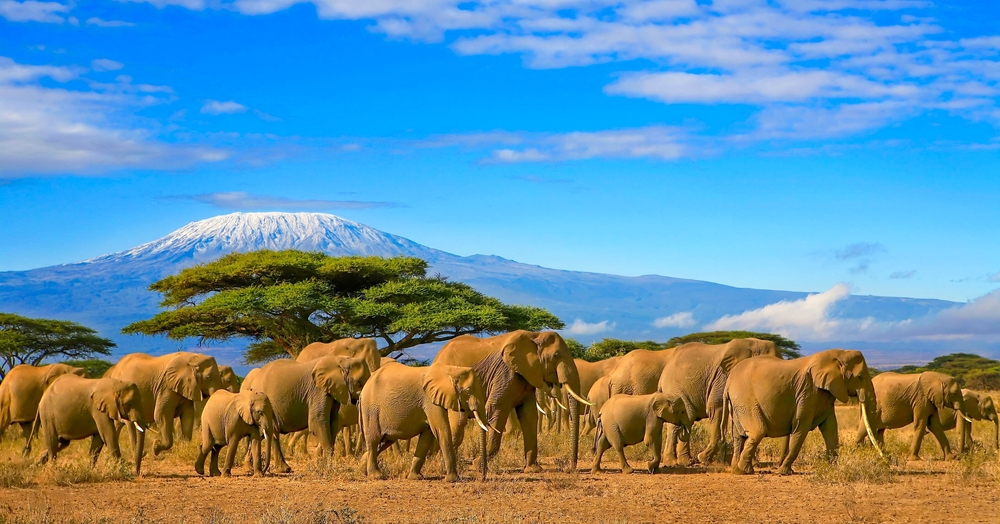
The African savanna elephant is the largest land animal alive and is Endangered, down roughly 60% over 50 years. It is also an ecosystem engineer: elephants push over trees, dig for water in dry riverbeds, and disperse seeds, and the holes they dig are used by everything else in a drought. Save the Elephants tracks herds by GPS collar and Sheldrick Wildlife Trust runs the orphan rescue program in Tsavo.
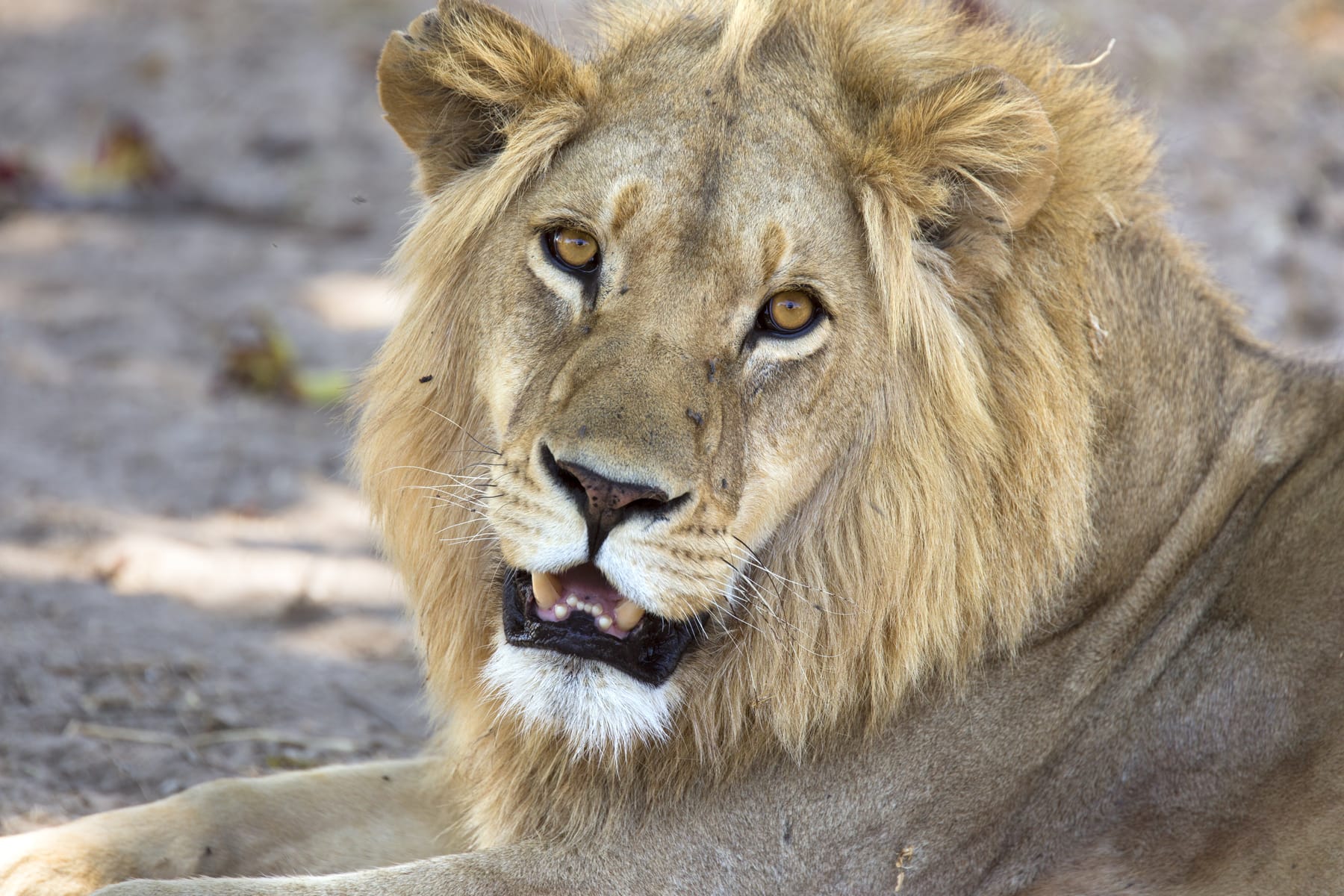
The lion is Vulnerable and is the only cat that lives in permanent social groups. Its range has collapsed to fragments of what it was, and most remaining lions live in or beside protected areas. Panthera works across the range.
The cheetah is Vulnerable and hunts by day specifically to avoid lions and hyenas, which take its kills. Most surviving cheetahs live outside protected areas, which is why Cheetah Conservation Fund works on conflict with farmers rather than on parks.
The leopard is Vulnerable and the most adaptable of the three, persisting close to human settlement across Africa and into Asia.
The black rhinoceros is Critically Endangered but recovering, having more than doubled from a low of about 2,400 animals in 1995. The white rhinoceros is Near Threatened and is the larger of the two, with a wide square lip for grazing rather than the black rhino's hooked lip for browsing. Save the Rhino International and Big Life Foundation both work on protection.
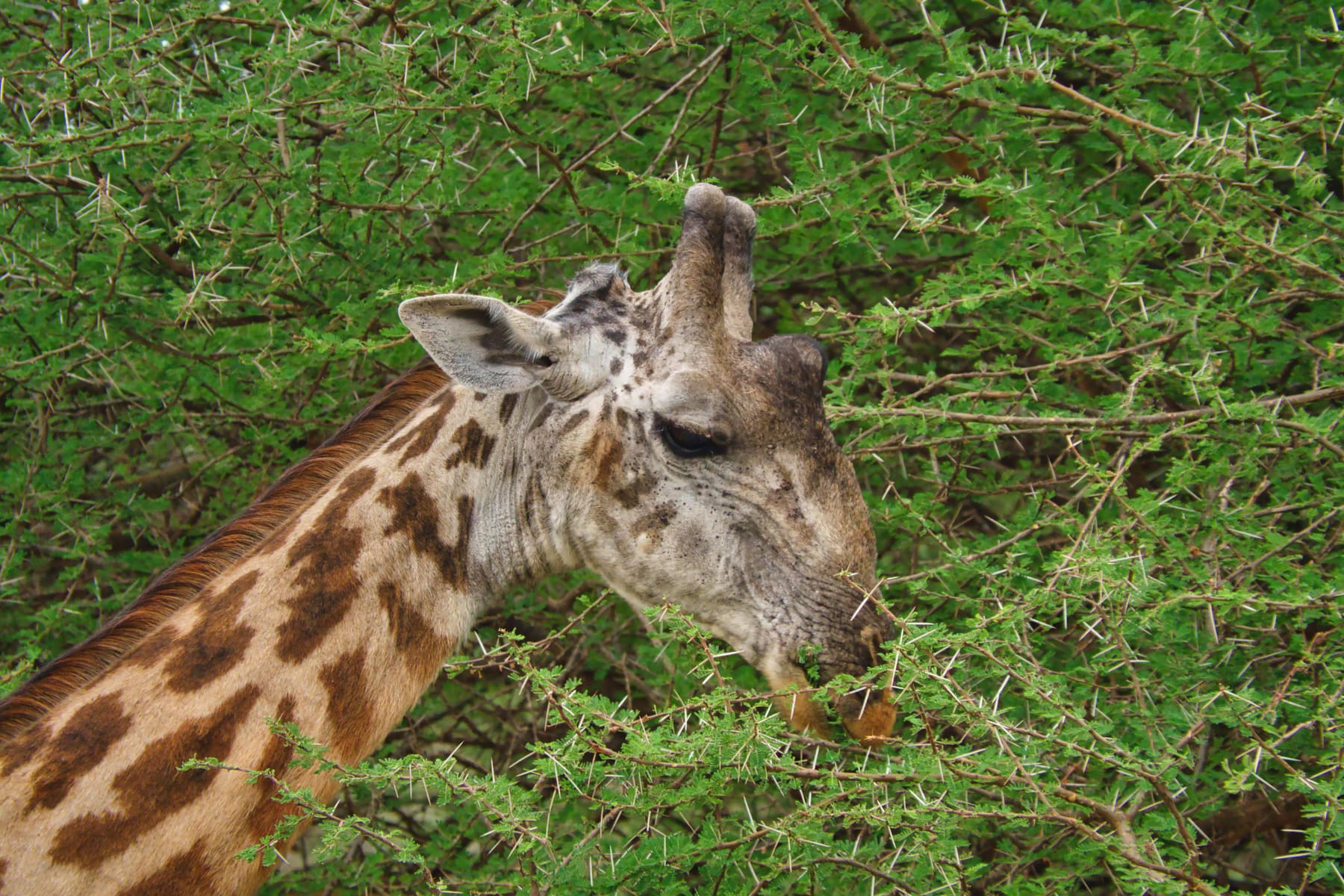
The giraffe is Vulnerable, which surprises people, and has declined quietly while attention went elsewhere. It has the same number of neck vertebrae as you do, seven, each one enormously elongated.
The African wild dog is Endangered and is one of the most successful predators alive, with hunt success rates far above lions, because it hunts cooperatively over long distances. It needs vast territory, which is exactly what fragmented landscapes no longer offer.
The meerkat is Least Concern and lives in cooperative groups where individuals take turns as sentry, which is one of the clearest examples of altruistic behavior in mammals.
The forest
The African forest elephant is a separate species from its savanna relative, confirmed by the IUCN in 2021, and it is Critically Endangered after losing more than 86% of its population in 31 years. It disperses the seeds of large forest trees that have no other disperser, so its loss changes the forest's composition for centuries.
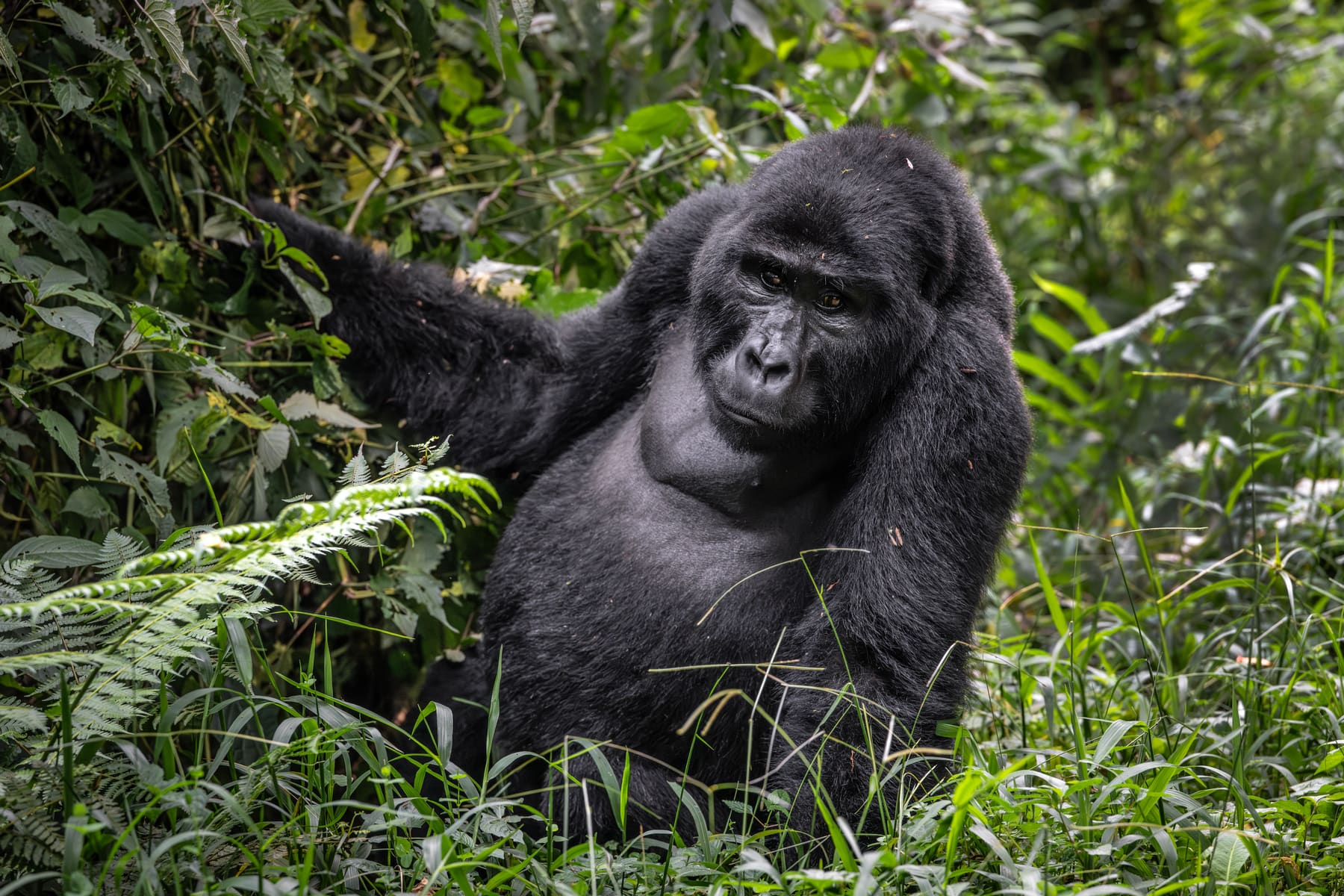
The western lowland gorilla is Critically Endangered and the mountain gorilla is Endangered but increasing, the only great ape whose numbers are rising. Dian Fossey Gorilla Fund has worked in Rwanda since the 1960s.
The chimpanzee and the bonobo are both Endangered and are separated by the Congo River, which neither can cross. The Jane Goodall Institute works across chimpanzee range.
The okapi is Endangered and was unknown to science outside central Africa until 1901. It is the only living relative of the giraffe, striped like a zebra, and lives alone in dense Congo Basin forest.
The giant pangolin is Endangered and taken for its scales. Pangolins are the most trafficked wild mammals on Earth, and the African Pangolin Working Group works the trafficking routes.
The coast and the water
The African penguin is Endangered, and the cause is not what most people guess. Commercial fishing has taken the sardines and anchovies it depends on, so the birds are starving rather than being hunted.
The great white shark is Vulnerable, and Marine Dynamics in South Africa runs research funded by tourism. The whale shark is Endangered and is the largest fish alive at up to 18 meters.
The hippopotamus is Vulnerable and is worth understanding properly, because its role is unusual: hippos graze on land at night and defecate in water by day, moving enormous quantities of nutrients from the savanna into rivers and lakes. That transfer feeds fish populations that people depend on.
The Big Five, and why the phrase exists
Lion, leopard, elephant, rhinoceros, and buffalo. The phrase comes from trophy hunting rather than from ecology: these were the five animals considered most dangerous to hunt on foot, which is why the list includes buffalo and leaves out the cheetah and the giraffe.
It stuck because safari marketing found it useful, and it now shapes what visitors expect to see and therefore where tourism money goes. That has consequences. An animal on the list attracts funding and attention; one off it does not, regardless of how threatened it is. The giraffe is Vulnerable and declined quietly for decades partly because nobody was counting it as a headline species.
Worth knowing if you are choosing where to give: the Big Five is a marketing category, not a conservation priority list.
What threatens the animals in Africa
Three pressures do most of the damage, and they are not equally famous.
Habitat conversion is the largest and the least reported. Land is cleared for agriculture and settlement, ranges fragment, and animals that need to move cannot. This affects everything from wild dogs to elephants.
Human-wildlife conflict is the mechanism that actually kills many individual animals. A lion that takes cattle, an elephant that raids a field, a leopard near a village: the response is usually lethal, and it is a livelihood problem before it is a conservation problem. The programs that work address both, which is why compensation schemes, predator-proof enclosures, and beehive fences appear so often in serious conservation budgets.
Poaching and trafficking takes elephants for ivory, rhinos for horn, and pangolins for scales, and it is organized rather than opportunistic.
The IUCN Red List assessments for these species and the African Wildlife Foundation both point to the same conclusion: the species doing best are the ones where local communities have a direct stake in the animals being alive.
The species nobody puts on a poster
Africa's conservation attention concentrates on about a dozen large mammals, and the concentration has costs.
Vultures are the clearest example. African vulture populations have collapsed by more than 80% in some regions, largely from poisoning, a decline the IUCN Red List records across nearly every African vulture species, and they matter more than their reputation suggests: a carcass stripped by vultures within hours does not become a reservoir for anthrax and rabies. Where vultures disappear, feral dog numbers rise and disease follows.
Pangolins are trafficked in larger numbers than elephants and rhinos combined and attract a fraction of the funding. Amphibians and freshwater fish across the continent are barely assessed at all.
None of this argues against protecting elephants. It argues that the list of animals in Africa worth funding is longer than the list people arrive already caring about, which is a gap our directory of projects exists to close.
Where to see them without making it worse
Wildlife tourism funds a large share of African conservation and can also do harm, depending entirely on how it is run. Our guide to ethical wildlife tourism covers the questions worth asking before booking, and what wildlife conservation is for explains why community revenue keeps turning out to be the thing that decides whether protection holds.
If you want any of these in more depth, our guide to desert animals covers the Sahara and Kalahari species that solved water rather than grass, wetland animals covers the hippo and the systems it moves nutrients through, big cats covers all 11 species and which are threatened, grassland animals explains how 14 species divide up the same grass without starving each other out, the complete guide to elephants covers all three species, and the great apes covers the six species of which every single one is threatened.
Every organization named above has a page in our directory of projects with its location and the species it works with.