How to protect endangered species, ranked by what works
How to protect endangered species is a better-answered question than it looks. There are more than 48,000 species listed as threatened on the IUCN Red List. For almost every one of them, we already know what the threat is and what would reduce it. The missing input is rarely knowledge.
That makes the question of how to protect endangered species unusually tractable, and it also means the answer is boring. The interventions that work are the ones that are expensive, repetitive, and sustained. The interventions people reach for first are usually the least effective.
Here is the order, roughly by evidence.
1. Protect habitat, because it covers everything at once
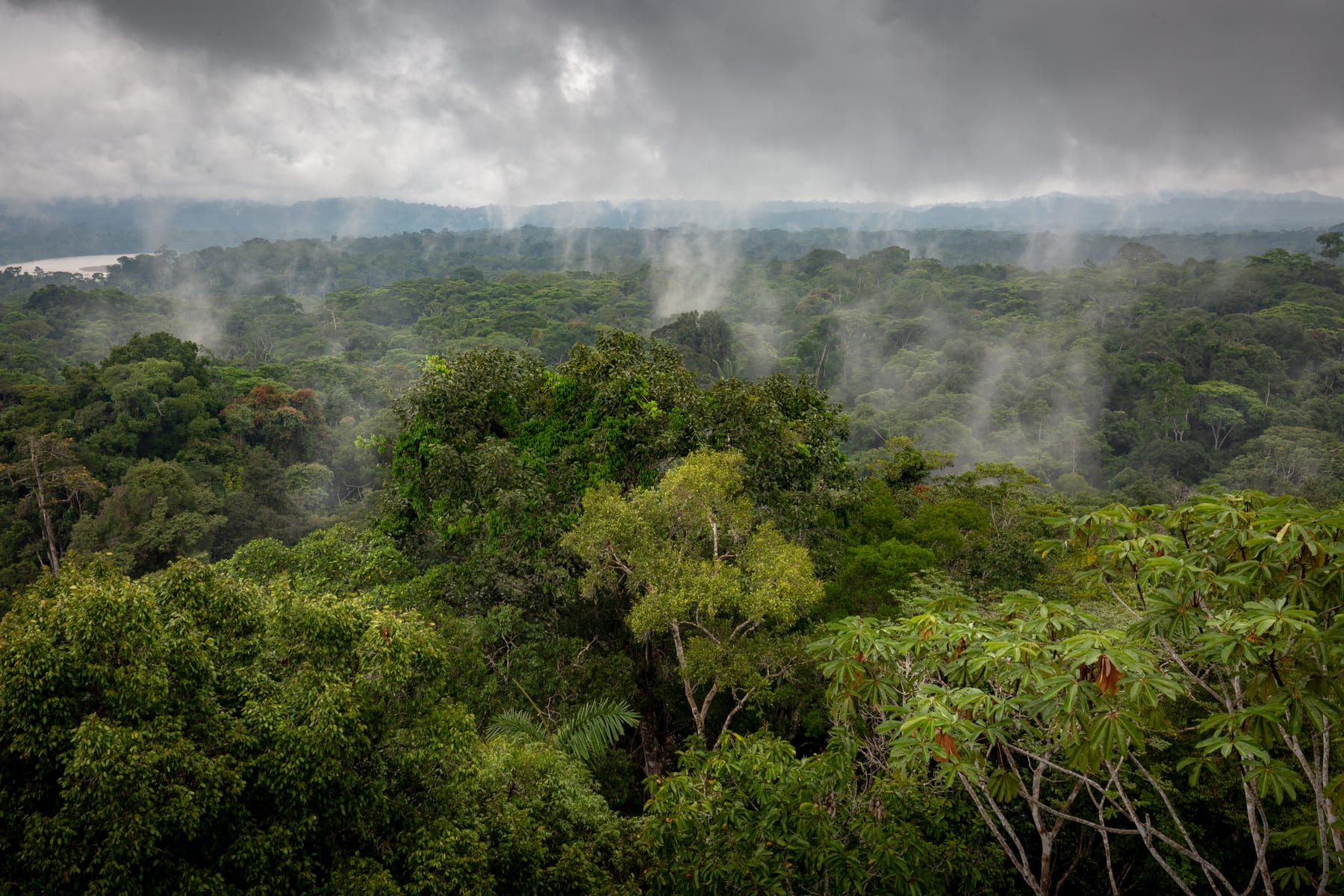
Habitat loss is the leading threat for the large majority of threatened species, and habitat protection is the only intervention that helps every species in a place simultaneously, including the ones nobody has assessed.
It is also the least photogenic, which is part of why it is underfunded relative to its effect. Buying land, paying rangers, and maintaining a boundary produces no single dramatic moment.
What matters more than raw area is connectivity. A population split into fragments behaves like several small populations rather than one large one, and small populations lose genetic diversity, which is the trap the Sumatran rhinoceros is in now. Poaching is no longer its main problem. Fewer than 50 animals unable to find each other is.
That is why serious programs fund corridors between reserves rather than more reserves. Panthera runs a jaguar corridor from Mexico to Argentina for exactly this reason.
2. Name the specific threat and remove it
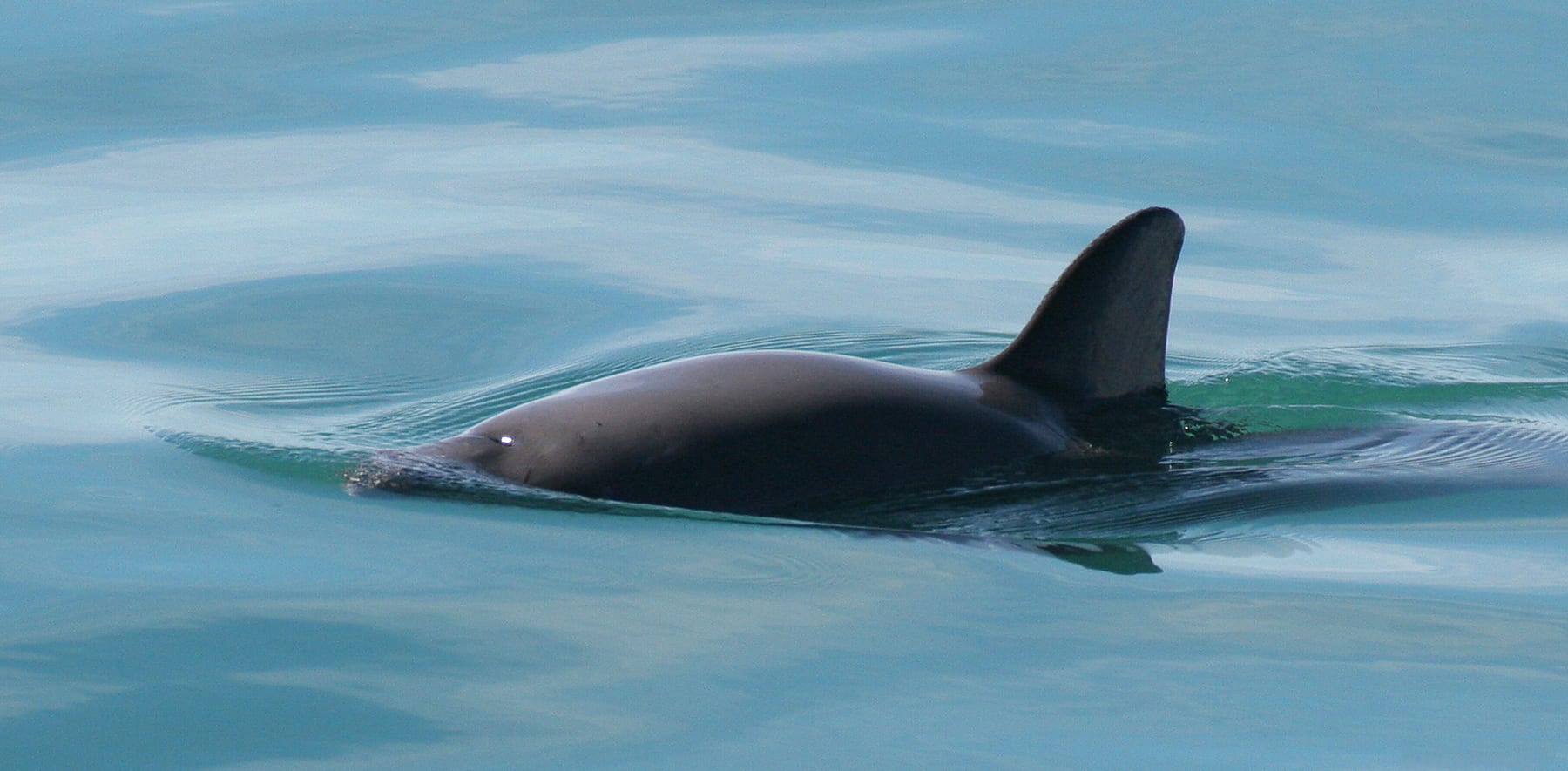
One of the few photographs ever taken of a living vaquita. Photo: Paula Olson, NOAA (public domain).
Threats are particular, not general, and "habitat loss" as a catch-all often hides the actual mechanism.
The vaquita is Critically Endangered with around ten animals left, and nobody hunts it. It drowns in gillnets set illegally for a different fish. The Christmas Island shrew was killed by a parasite carried by introduced rats. The African penguin is starving because commercial fishing took the sardines it eats.
Three completely different interventions. You cannot fix a mechanism you have not identified, and generic conservation spending frequently misses because it never named the mechanism.
3. Make the animals worth more alive, to the people who live there
This is the item that decides whether the first two hold, and it is the one most often left out of donor-facing messaging.
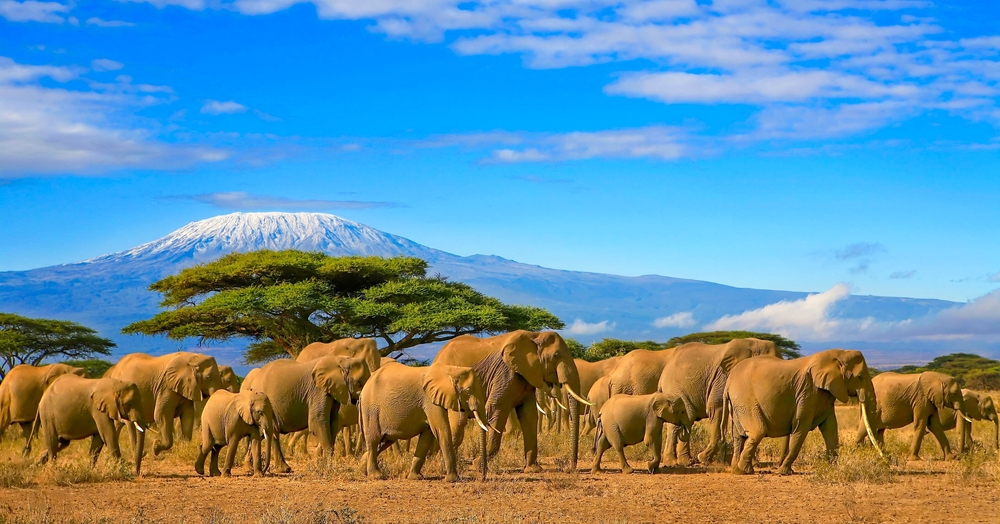
An elephant that raids a field, a lion that takes cattle, a leopard near a village: each is a livelihood problem before it is a conservation problem, and the usual response is lethal. Programs that address both work. Compensation schemes, predator-proof enclosures, beehive fences, and community conservancies that route tourism revenue to the people on the boundary all change the local arithmetic.
The black rhinoceros recovery from about 2,400 animals in 1995 to more than double that rests on three things: armed protection, translocation, and conservancies that gave communities a stake. Cheetah Conservation Fund built a livestock guarding dog program for the same reason, because most cheetahs die on farmland rather than in parks.
4. Breed and reintroduce, but only as a backstop
Captive breeding is the most visible conservation activity and the last resort, appropriate when a wild population can no longer sustain itself.
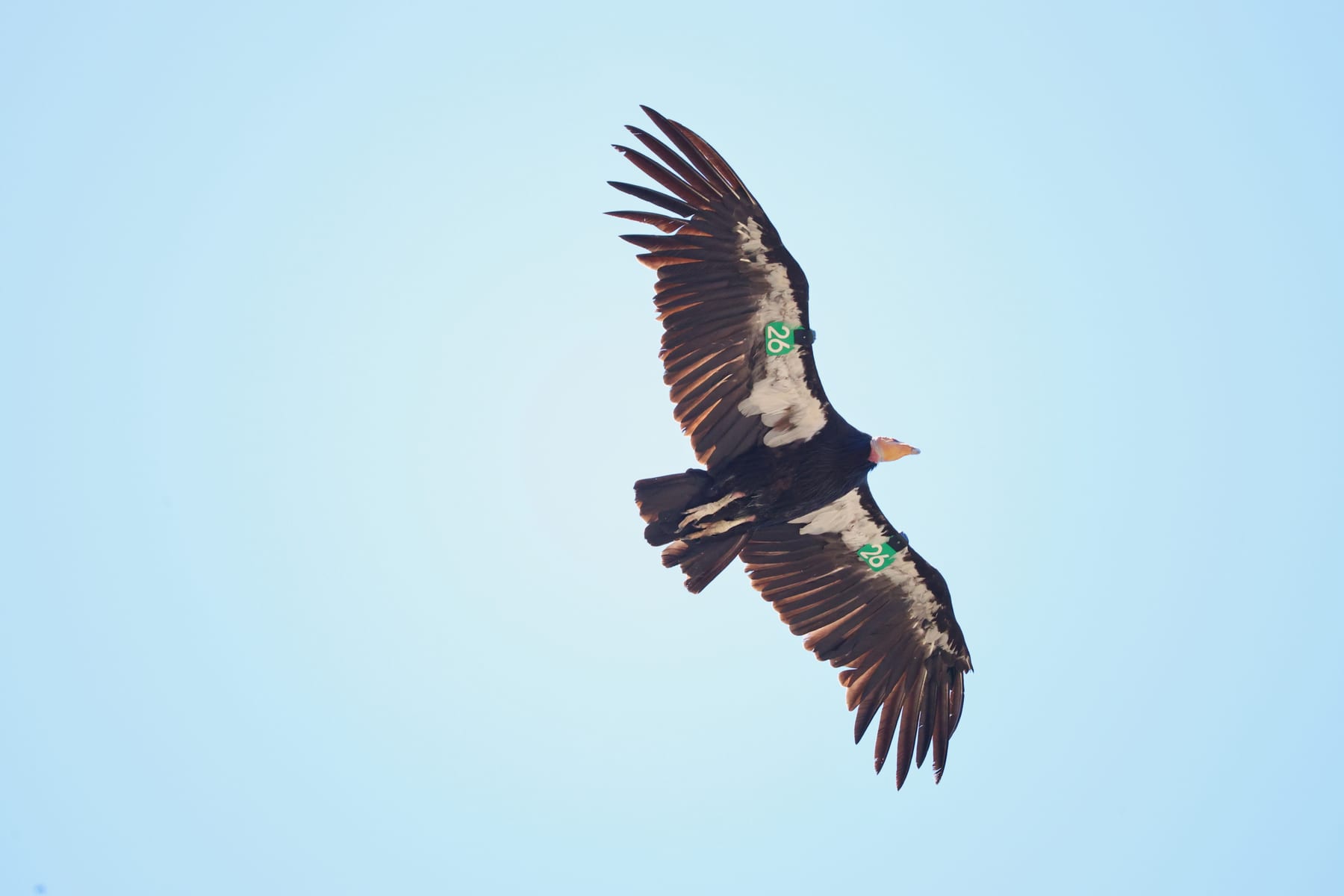
It works. The California condor went to 27 birds, all taken into captivity in 1987, and there are now several hundred with about half flying free. The Iberian lynx came back from under 100 animals.
It is also slow, expensive per animal, and incomplete on its own. Condors still die of lead poisoning from ammunition in the carcasses they scavenge, which is a habitat-side problem no amount of breeding fixes. A breeding program without a plan to return animals to a place worth returning to is a collection.
5. Fix the law, then enforce it
Legal protection is necessary and insufficient, and the pairing is the point.
The American alligator was listed as endangered in 1967 and delisted as recovered in 1987, which is among the fastest recoveries on record. Two things drove it: hunting was regulated rather than discouraged, and the wetlands were protected at the same time. Either alone would have failed. The same recovery happened to the American crocodile in Florida, which is why the two now overlap in one place on Earth, covered in alligator vs crocodile.
CITES has banned international trade in tortoiseshell since 1977, and the hawksbill turtle is still Critically Endangered, because a ban without enforcement changes the paperwork rather than the trade. The gap between a law existing and a law working is where most of the conservation effort actually goes.
How to protect endangered species as an individual
The honest ranking here is different from the one most articles give.
Give money, ideally monthly. This is first by a wide margin and it is unglamorous. Predictable recurring income is what lets an organization hire a ranger, and rangers are most of the work. A small monthly amount is worth more operationally than a larger one-off gift.
Give to specific organizations rather than causes. "Save the rainforest" is not an address, and neither is "endangered animals": the ten species closest to the edge each need something different. Our directory of projects lists organizations with their location and the species they work with, which is the level of specificity that lets you check what your money does.
Choose where you travel carefully. Wildlife tourism funds a great deal of conservation and also damages a great deal, depending on the operator. Our guide to ethical wildlife tourism covers the questions worth asking.
Reduce demand where you are the demand. Palm oil, tropical hardwood, and certain seafood are the consumer links that actually connect to habitat loss. This matters, and it matters less than the first item.
Volunteer where the skill is needed. Beach patrols, nest monitoring, camera trap review, and species surveys are real work that organizations struggle to staff, and several of them can be done remotely. Our guide to volunteer vacations covers what is worth your time and what is a paid holiday wearing a conservation label.
Be skeptical of awareness as an end. Sharing a post is not impact. Awareness is not the bottleneck for the species above, and treating it as one is how good intentions produce no result.
What does not work as well as people think
Three things get more credit than the evidence supports.
Single-species campaigns without habitat. Protecting a charismatic animal in a landscape that continues to be cleared postpones the outcome rather than changing it.
Fencing and leaving alone. For grassland especially, removing grazing and fire destroys the habitat through succession. Some ecosystems need disturbance.
De-extinction. The technology is real and the conservation case is thin. Our guide to de-extinction covers why the gene editing involved is far more useful for restoring diversity to living populations than for reviving extinct ones.
The part that is not a science problem
The unit being protected, throughout, is a viable population rather than an animal. For most of the 48,000 threatened species, the science is done. Somebody has identified the threat, and somebody knows what would reduce it.
The Convention on Biological Diversity target of protecting 30% of land and sea by 2030 is the clearest statement of what would be needed, and it is not close to funded.
The gap is that the organizations positioned to act are chronically underfunded, and the people who would fund them cannot easily find them. That is an infrastructure problem rather than a knowledge problem, and it is the specific gap Wildlife Connect exists to close.