The one difference that sorts every type of whale
There are more than 90 species of cetacean, and the types of whales sort into exactly two groups. The difference is not size, and it is not where they live. It is what is inside the mouth.
The largest animals in the ocean are almost all filter feeders, which is true of the biggest sharks as well. Bulk feeding on very small prey is simply the most reliable way to get enormous.
Baleen whales have plates of keratin instead of teeth and filter enormous volumes of small prey. Toothed whales have teeth, hunt individual animals, and navigate by echolocation. Dolphins and porpoises are toothed whales, which is why a discussion of the types of whales has to include them.
That single split explains nearly everything else about how these animals live.
Baleen whales: the filter feeders
The blue whale is the largest animal that has ever lived, larger than any dinosaur, and eats some of the smallest prey in the ocean. It is Endangered after commercial whaling removed the overwhelming majority of the population.
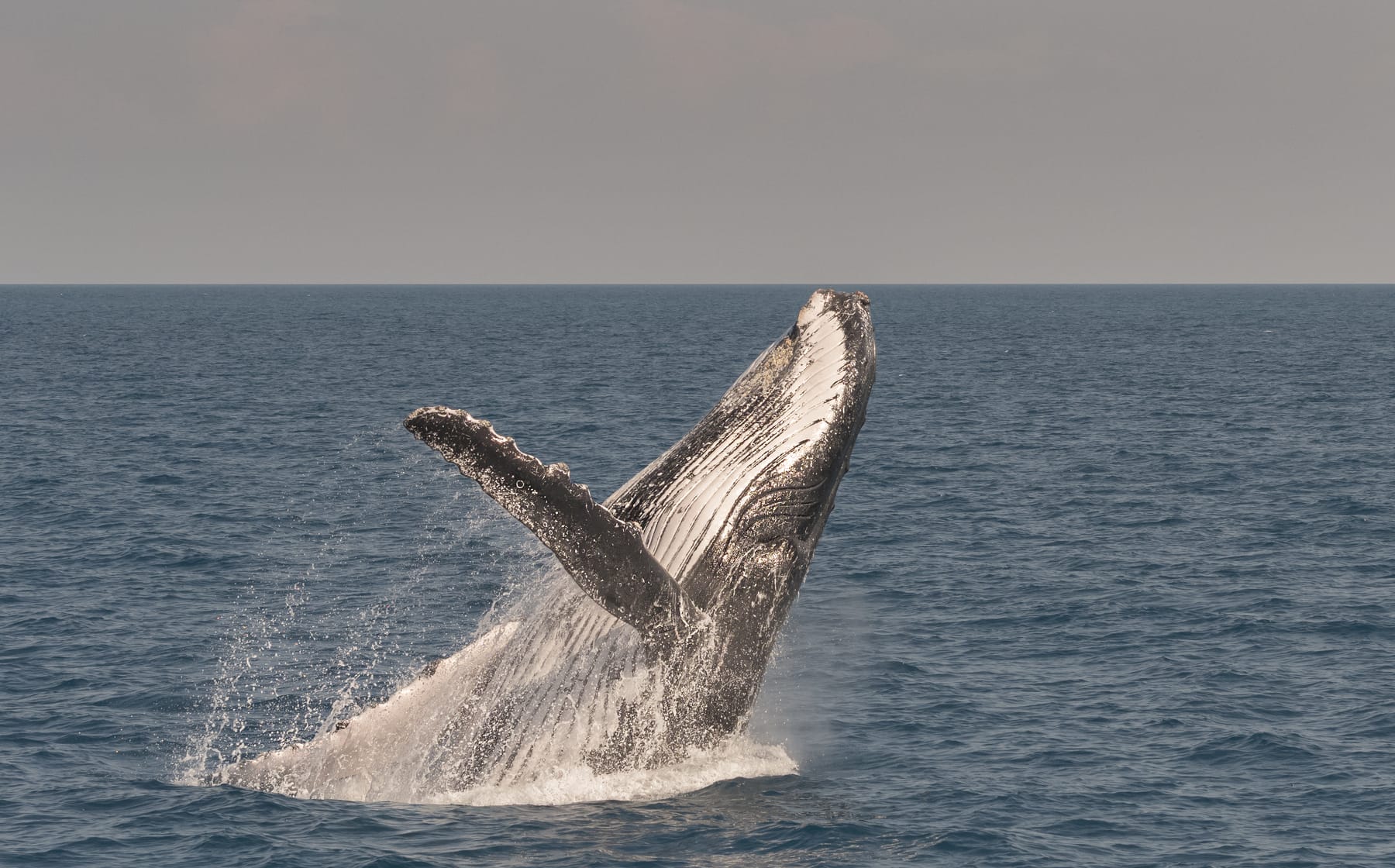
The humpback whale is the recovery story. Protected from whaling in 1966, it rebounded far enough to be listed Least Concern, and it is now the whale most people actually see. Males produce long structured songs that change across a population over a season, which is closer to culture than to instinct. Whale and Dolphin Conservation works across both species.
The North Atlantic right whale is Critically Endangered with around 370 individuals left. It was called the "right" whale because it floated when killed, which made it the right one to hunt. Today it dies from vessel strikes and entanglement in fixed fishing gear, according to NOAA Fisheries.
Toothed whales: the hunters
The sperm whale is the largest toothed whale and dives beyond 2,000 meters to hunt squid in complete darkness. It has the largest brain of any animal that has ever existed, and its head holds spermaceti, an organ used to focus the loudest sound produced by any animal.
It is Vulnerable.
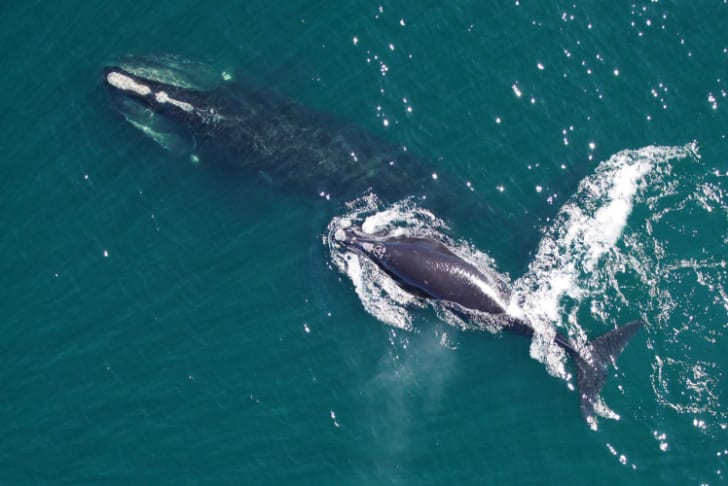
A right whale and her calf. Photo: Lisa Conger and Elizabeth Josephson, NOAA Fisheries (public domain).
The orca is the largest dolphin, not a whale in the strict sense, and is Data Deficient globally. That listing is unusual and revealing: separate orca populations specialize so completely, some eating only fish and others only marine mammals, that assessing them as one species tells you almost nothing. Some populations are thriving. Others number in the dozens.
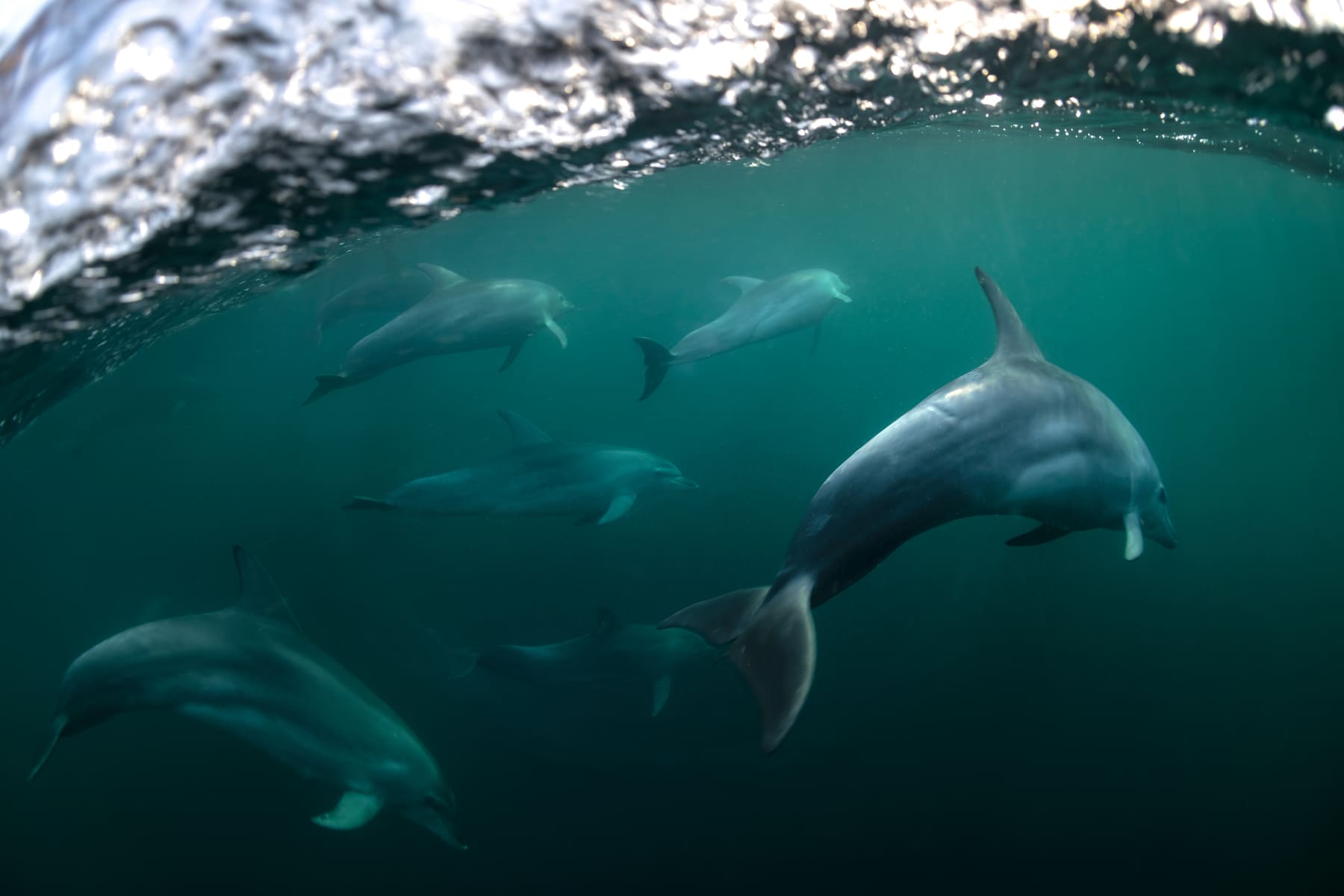
The narwhal carries a spiral tusk that is really an elongated canine tooth threaded with nerve endings. The bottlenose dolphin is Least Concern globally, which hides serious trouble in particular bays.
The vaquita is a porpoise, the smallest cetacean alive, and the most endangered marine mammal on Earth with roughly ten individuals left in the northern Gulf of California. It drowns in gillnets set illegally for a different species.
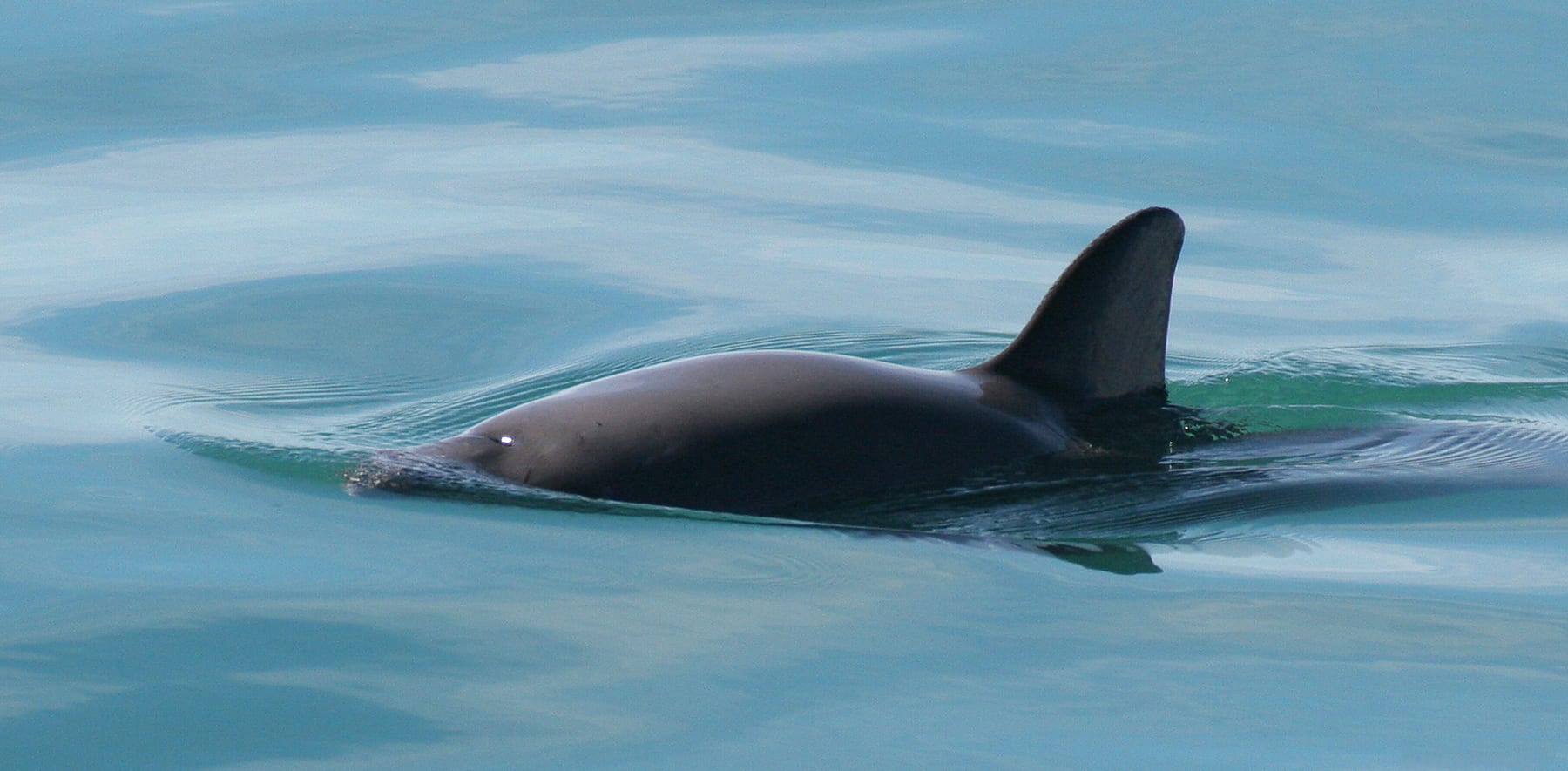
One of the few photographs ever taken of a living vaquita. Photo: Paula Olson, NOAA (public domain).
How the two groups feed
Baleen whales use bulk. A blue whale lunges into a swarm of krill, takes in a volume of water larger than its own body, and pushes it out through baleen plates, trapping the prey. A humpback may blow a spiral of bubbles to concentrate fish before lunging up through the middle, cooperating with other whales to do it.
Toothed whales use precision. They emit clicks and read the returning echoes to build a picture accurate enough to identify a single fish behind a sandbank. A sperm whale hunting at 2,000 meters is operating in permanent darkness and does not need light at all.
How long they live, and why it matters
Whales are among the longest-lived mammals, and the arithmetic has consequences.
Bowhead whales have been aged beyond 200 years, making them the longest-lived mammal known. Some individuals alive today were born before the invention of the telephone, and a few carry stone harpoon points from nineteenth-century hunts.
Long life goes with slow reproduction. A North Atlantic right whale female produces a calf roughly every three to five years at best, and the current interval has stretched further because entangled and undernourished females skip years entirely. With fewer than 70 breeding females left, the population cannot absorb the loss of even a handful of animals a year. This is why recovery programs count breeding pairs rather than animals.
That is the difference between a whale population and a fish population. A depleted fish stock can rebound in a decade. A depleted whale population takes a century, and only if the pressure stops completely. The IUCN Cetacean Specialist Group tracks those recovery timelines across species.
Whale culture, and why biologists use that word
Calling whale behavior cultural sounds like overreach until you look at what the word is doing. Culture here means information passed between individuals by learning rather than inherited genetically. It is a threshold only a handful of animals meet, and several whale species clearly do.
Humpback song is the clearest case. Every male in an ocean basin sings roughly the same song in a season, the song changes through the year, and every male adopts the change. In one documented case a new song spread from eastern Australia across the entire South Pacific over a few years, replacing the existing one wherever it arrived.
Sperm whales live in clans that share distinct patterns of clicks, and clans with different patterns avoid one another even in the same water. Orcas take it furthest: separate populations hunt entirely different prey, use different techniques, and do not interbreed despite overlapping ranges. Those are not subspecies. They are traditions.
This matters for conservation in a way that is easy to miss. When a population is reduced far enough, the knowledge goes with the animals. A migration route or a hunting technique that took generations to accumulate can be lost in a decade, and it does not come back simply because numbers recover.
Why whales matter beyond themselves
Whales move nutrients in a way nothing else can, and the mechanism is not obvious.
They feed at depth and release nutrient-rich plumes near the surface, where phytoplankton use them. Phytoplankton are the base of the entire marine food web and produce a large share of the oxygen on Earth. A recovered whale population is a more productive ocean rather than simply a more populated one.
That plume feeds the base of a food web 26 other ocean species sit on top of. When whales die, their bodies sink and support entire communities of deep-sea species for decades. Whaling did not only remove whales. It removed a nutrient pump that had been running for millions of years.
Which types of whales are most threatened
| Species | Status |
|---|---|
| North Atlantic right whale | Critically Endangered |
| Vaquita | Critically Endangered |
| Blue whale | Endangered |
| Sperm whale | Vulnerable |
| Humpback whale | Least Concern |
| Bottlenose dolphin | Least Concern |
| Narwhal | Least Concern |
| Orca | Data Deficient |
The pattern is clear once you separate the causes. Species hunted commercially and then protected have largely recovered, because whaling was a single pressure that could be switched off by treaty. Species dying from entanglement, vessel strikes, and bycatch have not, because those pressures are distributed across thousands of individual boats and no treaty switches them off.
The IUCN Red List reflects that split directly. The humpback came back. The right whale, which faces the modern pressures rather than the historical one, has not, and is now among the ten animals closest to extinction.