Top 10 endangered animals in the world (2026)
Around ten vaquita are left in the Gulf of California. Not ten thousand, not ten populations. Ten animals, in one stretch of water in northern Mexico, and the number has been falling for thirty years.
That figure comes from the 2023 acoustic survey coordinated by Mexico's environment ministry alongside international observers. It makes the vaquita the most endangered marine mammal on Earth, and it is a useful place to start, because it shows how fast the word "endangered" stops being an abstraction.
The ten species below are ordered by how close they are to disappearing, not by raw population count. A parrot with 250 birds and an intensive recovery program sits in a different position than a great ape with 13,000 individuals and an accelerating rate of forest loss. Population figures are the latest published estimates from the IUCN Red List or the named monitoring body, and all of them move.
For each animal we have tried to answer the question that actually matters: what does this species do that nothing else does, and what happens to the place it lives if it goes.
1. Vaquita
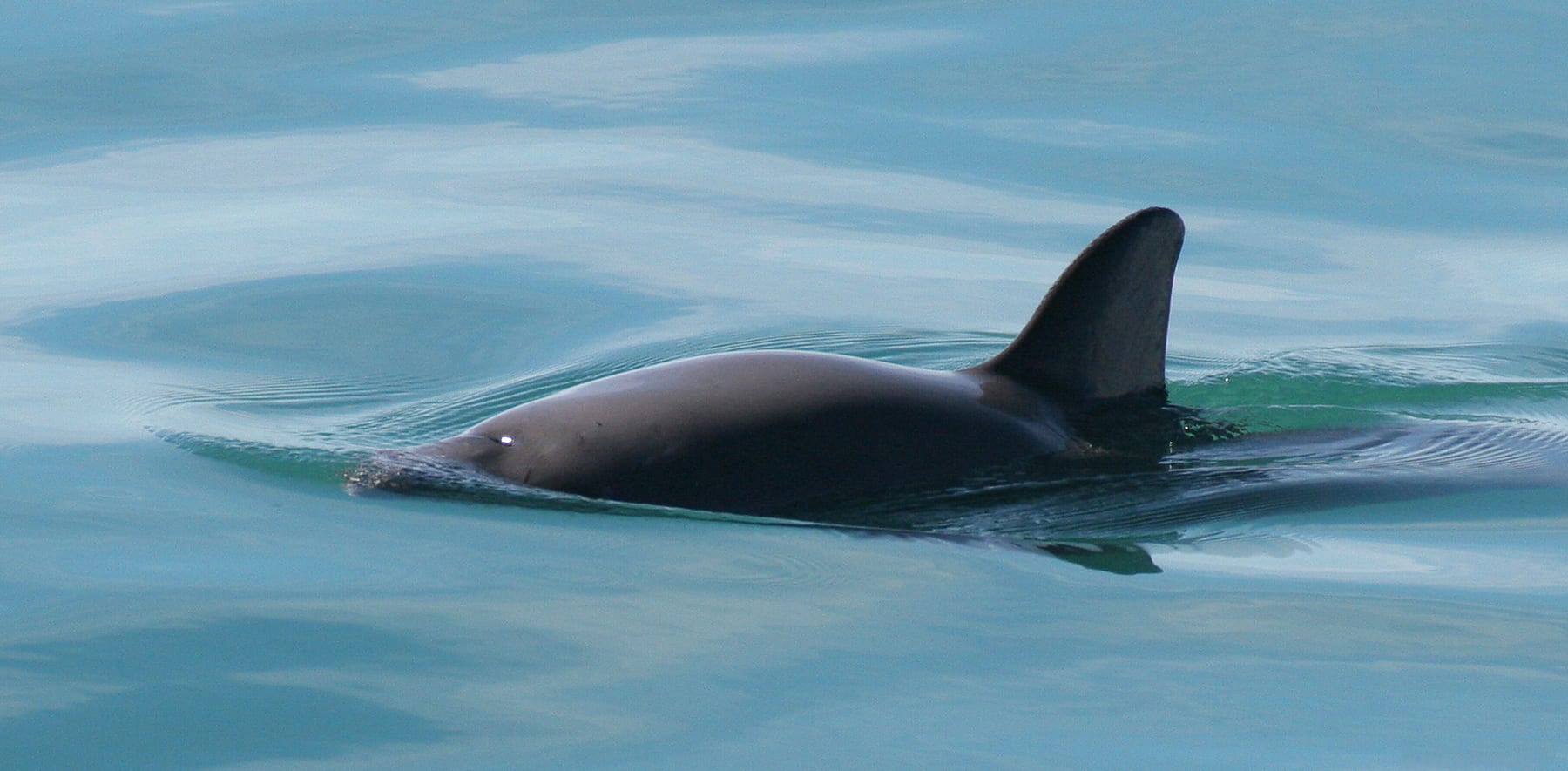
One of the few photographs ever taken of a living vaquita. Photo: Paula Olson, NOAA (public domain).
Around 10 remaining. The vaquita is a small porpoise that lives nowhere on Earth except the northern Gulf of California. Nobody hunts it. It drowns in gillnets set illegally for totoaba, a fish whose swim bladder sells into the traditional medicine trade in China.
That distinction matters more than it sounds. The vaquita is not competing with people for space or food. It is dying as a side effect of a fishery aimed at something else, which means the fix is mechanical rather than philosophical: remove the nets from about 12 square miles of water and the species has a chance. Losing it would make the vaquita the first cetacean driven to extinction by fishing gear in modern history, in a gulf that UNESCO lists as a World Heritage site for its marine diversity.
Photographs of living vaquita are genuinely rare. Fewer than a dozen good ones exist, which is its own kind of statistic.
2. Javan rhinoceros
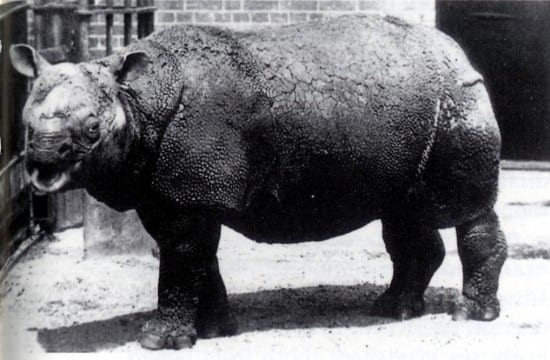
The Javan rhino that lived at London Zoo from 1874 to 1885. No free photograph of a wild Javan rhino exists today: what we know of the remaining animals comes almost entirely from camera traps in Ujung Kulon. Photo: T. Dixon, Zoological Society of London (public domain).
Around 76 remaining. Every Javan rhinoceros alive lives inside Ujung Kulon National Park, on the western tip of Java in Indonesia. One population, one park, and no captive animals anywhere in the world to fall back on.
The concentration is the danger. A disease outbreak, a tsunami, or an eruption of the nearby Anak Krakatau volcano could take the entire species in a single event, and none of those are hypothetical risks in that particular place. Javan rhinos are also browsers that open up dense forest as they feed, creating gaps that other plants and animals use. The International Rhino Foundation and Save the Rhino International both fund protection work in the park, and the IUCN Asian Rhino Specialist Group publishes the population assessments.
3. Sumatran rhinoceros
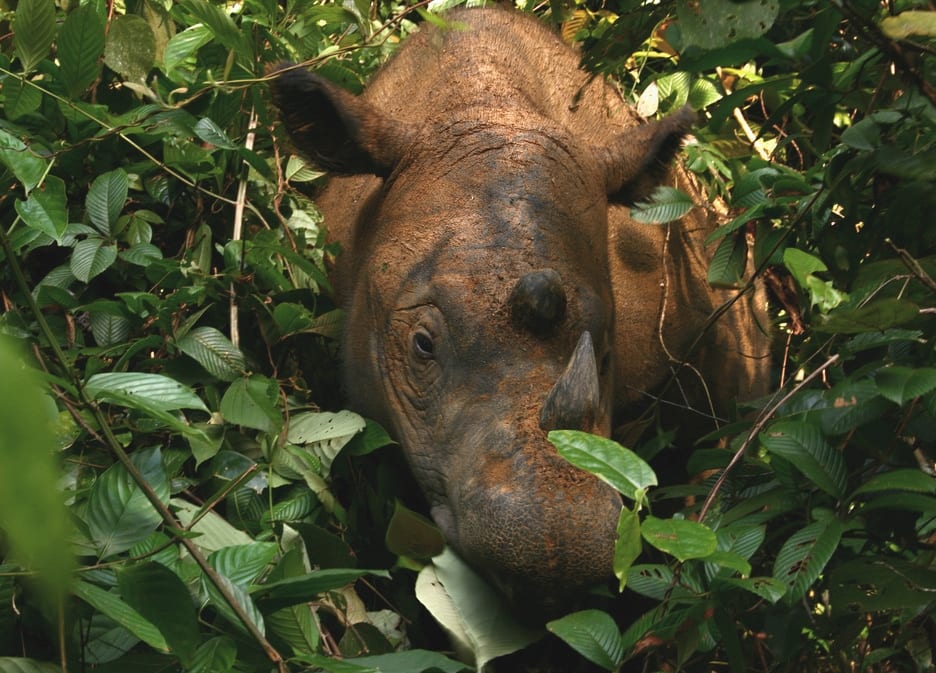
Rosa, at the Sumatran Rhino Sanctuary in Way Kambas, Sumatra. Photo: Willem v Strien, CC BY 2.0.
Fewer than 50 remaining. The Sumatran rhinoceros is the smallest rhino species, the only Asian rhino with two horns, and the closest living relative of the woolly rhino that died out at the end of the last ice age. It is a reddish, hairy animal that vocalizes almost like a whale.
Its problem is no longer mainly poaching. It is loneliness, in a literal demographic sense. The survivors are scattered across fragmented forest in Sumatra and Indonesian Borneo in groups too small and too far apart to find each other and breed. Females that go too long without breeding develop reproductive problems that make them infertile, so every year of isolation compounds. The International Rhino Foundation now focuses on managed breeding, because leaving the animals where they are has stopped working.
4. Kakapo
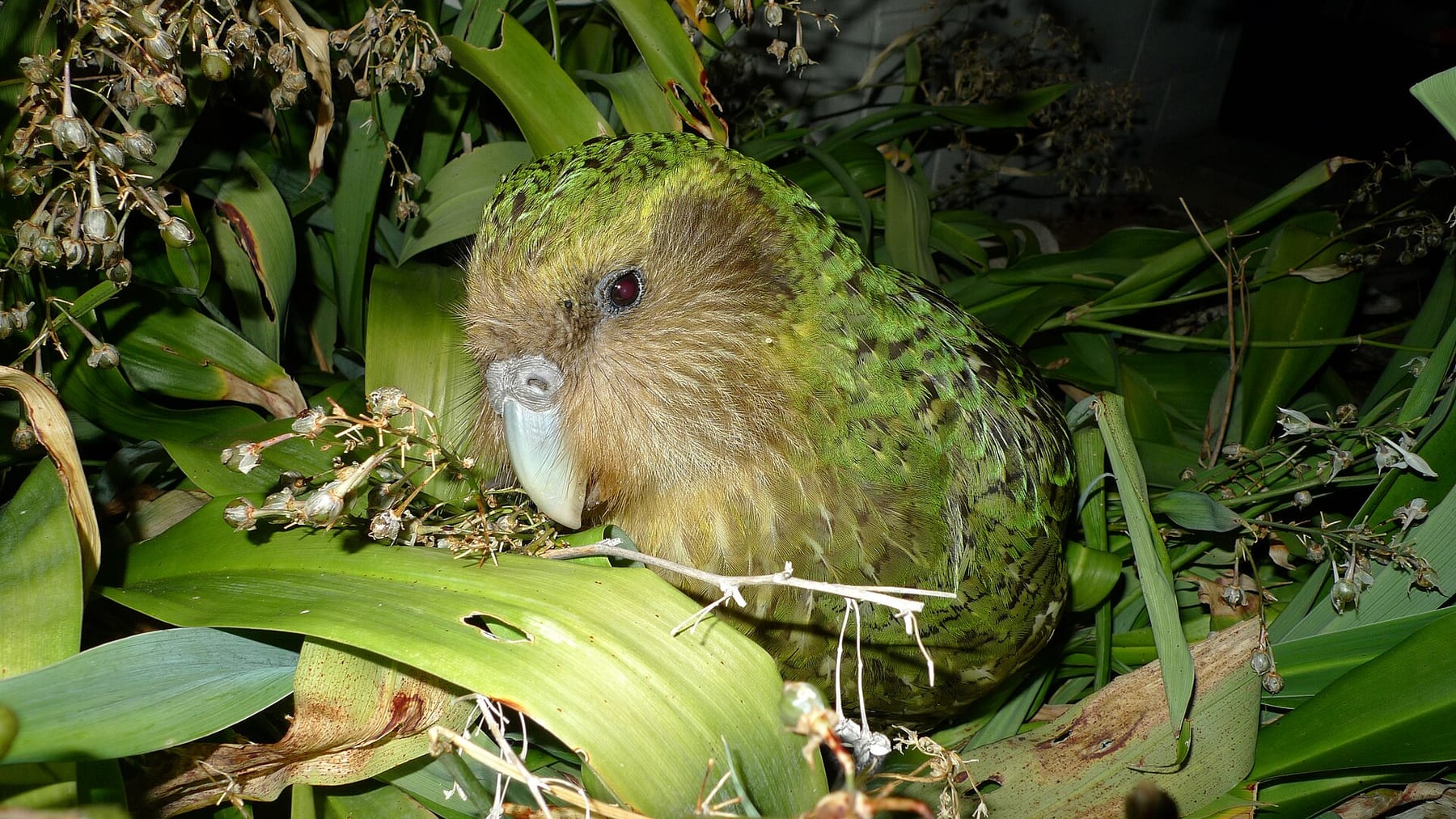
Sirocco, the best known of the surviving kakapo. Photo: New Zealand Department of Conservation, CC BY 2.0.
Around 250 remaining. The kakapo is a flightless, nocturnal, ground-nesting parrot from New Zealand. It can live past 60 years. It is the heaviest parrot in the world, it breeds only in years when native rimu trees fruit heavily, and the males call for mates by inflating a throat sac and booming a low note that carries for miles.
None of that works against mammals. Kakapo evolved on islands with no ground predators, so they freeze when threatened, which is a good strategy against hunting birds and a fatal one against stoats and cats. The population hit 51 in 1995. Every living kakapo is now named, microchipped, and tracked by New Zealand's Department of Conservation through Kakapo Recovery, on predator-free islands. It is one of the most intensively managed wild populations anywhere, and the reason the number is climbing instead of falling.
5. North Atlantic right whale
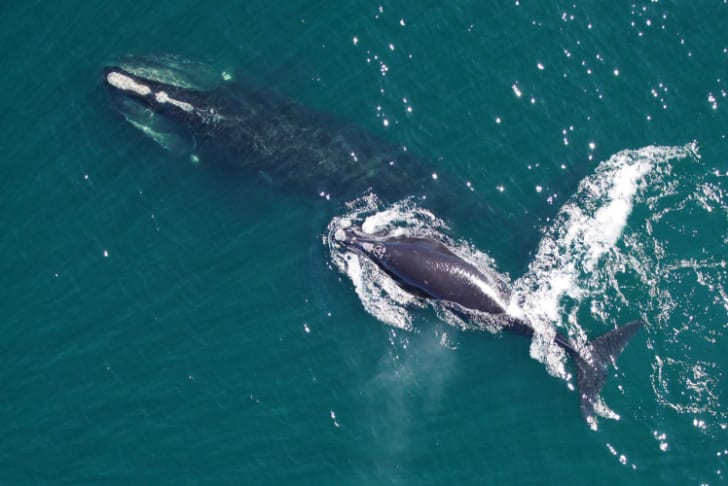
A right whale and her calf. Photo: Lisa Conger and Elizabeth Josephson, NOAA Fisheries (public domain).
Around 370 remaining. The North Atlantic right whale migrates along the eastern seaboard of the United States and Canada, from calving grounds off Florida and Georgia to feeding waters in the Gulf of Maine. That route runs directly through some of the busiest shipping lanes and fishing grounds in the world.
The two causes of death are vessel strikes and entanglement in the vertical ropes of fixed fishing gear, according to NOAA Fisheries. Both are human-caused and both are engineering problems with known solutions: slower vessel speeds in calving season, and ropeless gear. Fewer than 70 breeding females remain, and an entangled whale can take months to die, which means the population loses animals long after the encounter that killed them.
6. California condor
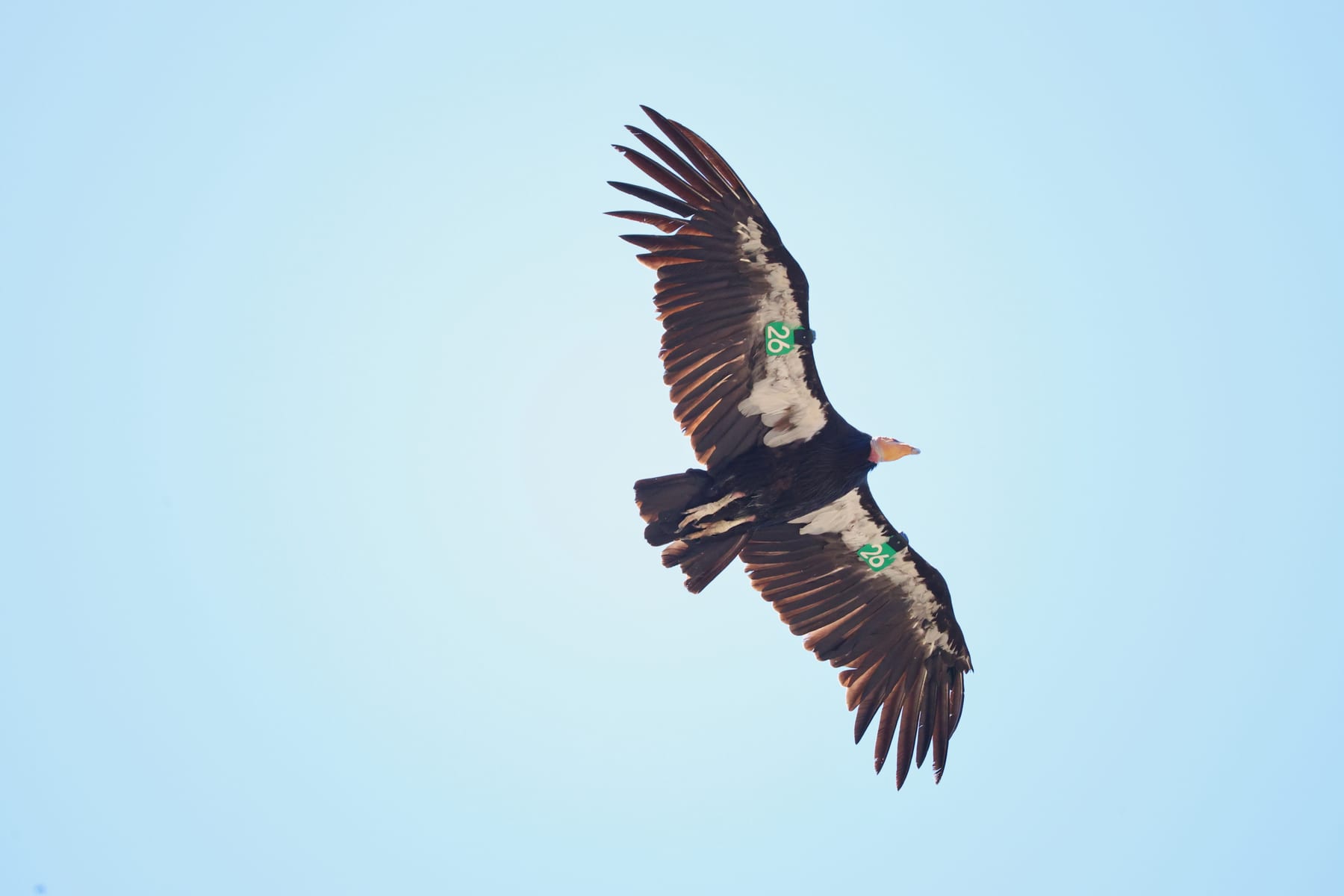
Around 560 total, roughly half of them flying free. In 1987 the entire California condor population was 27 birds, and biologists made the decision to capture every last one. The species was extinct in the wild for five years while they bred it back.
It worked, and it is still working, but the birds keep hitting the same wall. Condors are scavengers, and lead fragments from ammunition left in carcasses remain the leading cause of death, according to US Fish and Wildlife Service monitoring. Every free-flying condor is tagged, and many are periodically recaptured for testing and treatment. The condor matters beyond itself here: it is the clearest evidence available that a species can be pulled back from 27 individuals, and the lead problem it exposes affects eagles, ravens, and every other scavenger sharing those carcasses. Ventana Wildlife Society releases and tracks condors along the central California coast.
7. Sumatran orangutan
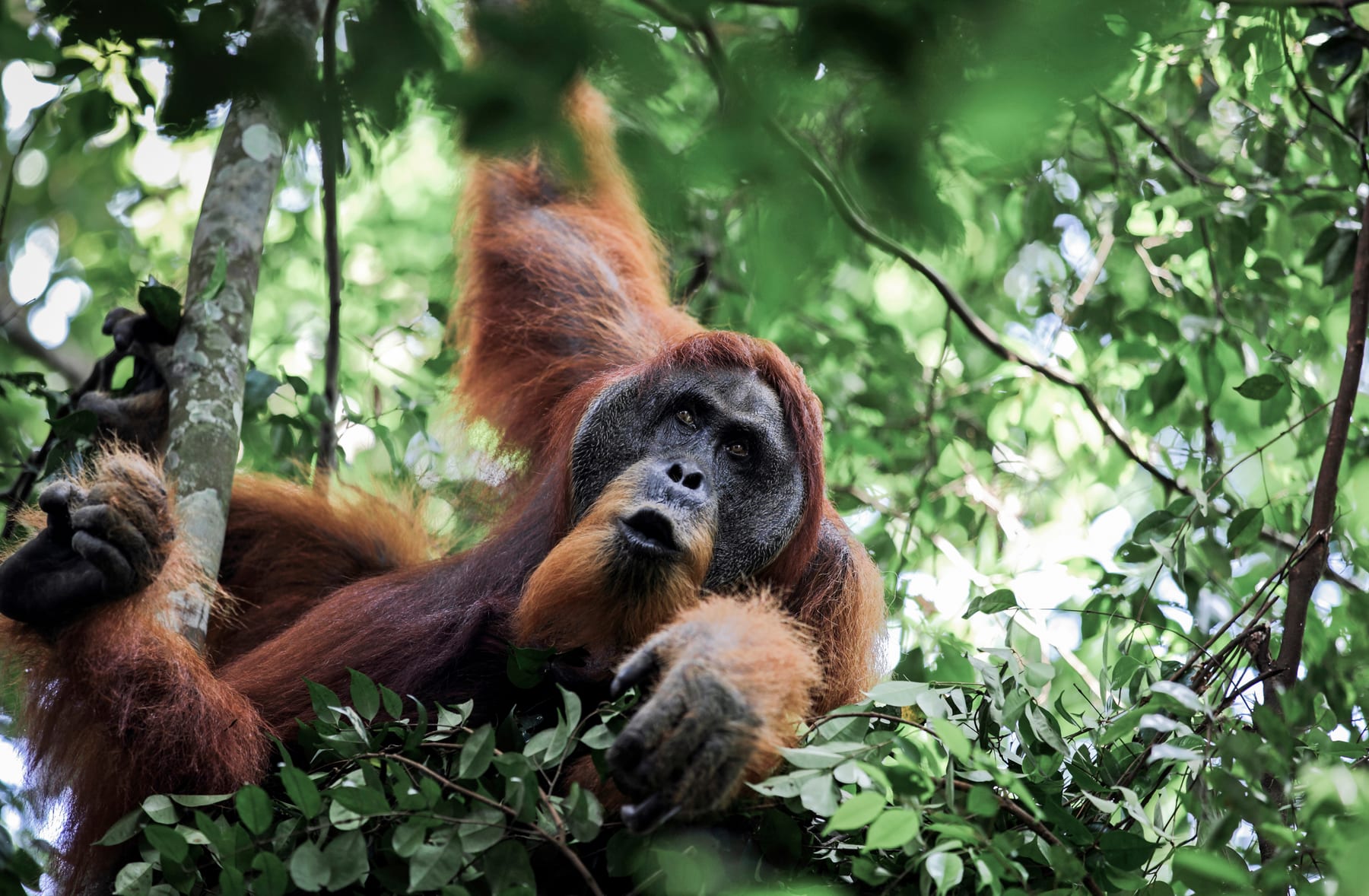
Around 13,800 remaining. The Sumatran orangutan spends almost its whole life in the canopy, which makes forest loss an immediate threat rather than a slow one. An orangutan cannot walk to the next forest when the trees between are gone.
Most survive in the Leuser Ecosystem in northern Sumatra, the only place left on Earth where orangutans, tigers, rhinos, and elephants still share the same forest. Orangutans are also the main dispersers of large-seeded trees there. They swallow fruit whole and carry seeds far from the parent tree, and several tree species have no other animal capable of doing that job, so the forest itself thins out behind them when they disappear. Orangutan Foundation International runs rescue, rehabilitation, and release work in the region.
8. Bornean orangutan
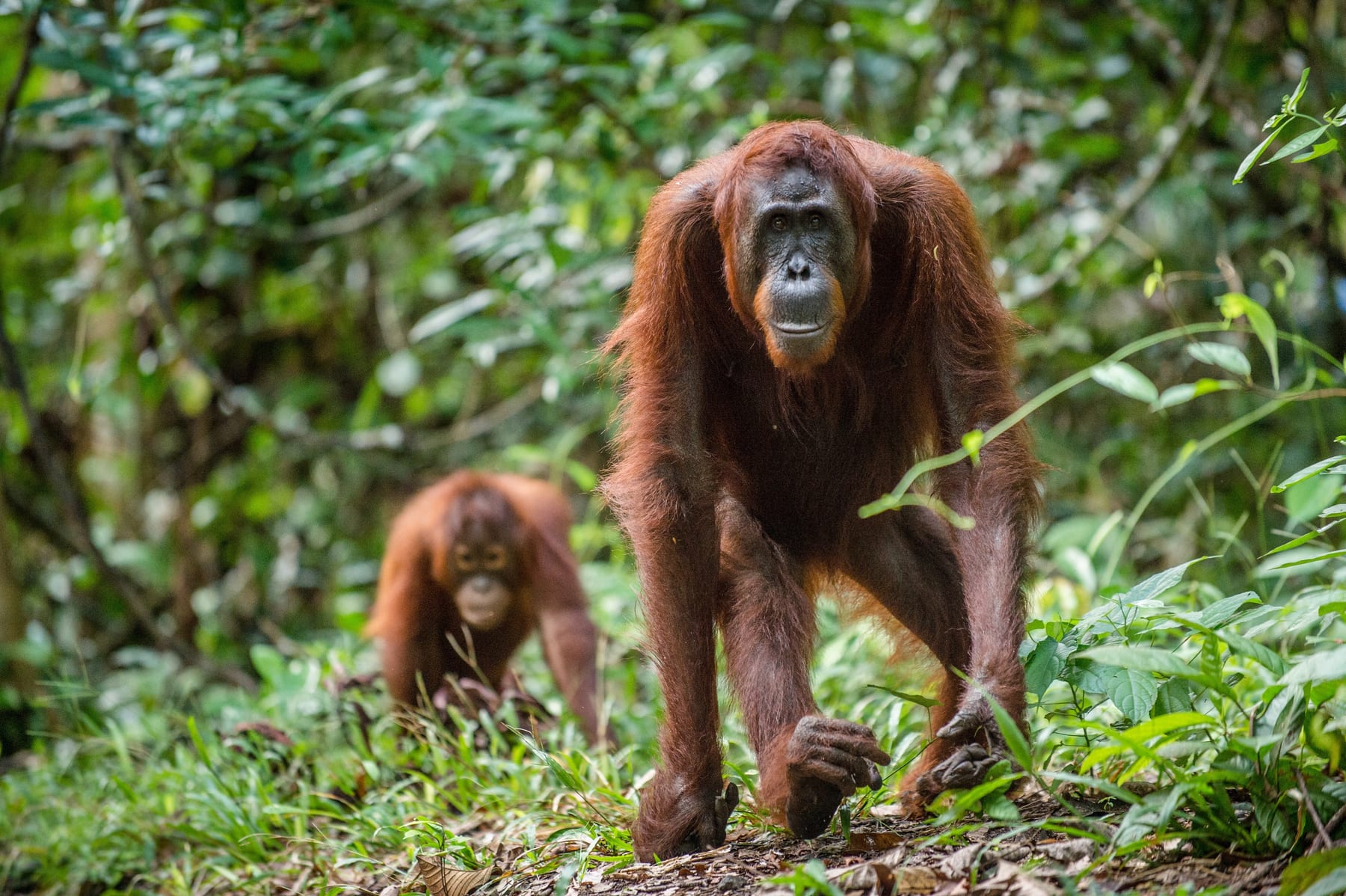
Around 104,700 remaining. That number sounds comfortable until you set it against the trend and the biology. The IUCN estimates the Bornean orangutan population has fallen by more than half in 60 years and projects further decline through 2050.
Here is why that is so hard to reverse. Female orangutans give birth roughly once every eight years, the longest interval of any land mammal. A population that loses a quarter of its females cannot simply breed its way back within a human lifetime, no matter how much forest is protected afterward. Orphaned infants pulled from cleared forest arrive at rehabilitation centers needing six to eight years of care before release, because everything an orangutan knows about finding food and building a nest is learned from its mother rather than instinctive. Orangutan Foundation International and the Center for Great Apes both work with rescued individuals.
9. Hawksbill turtle
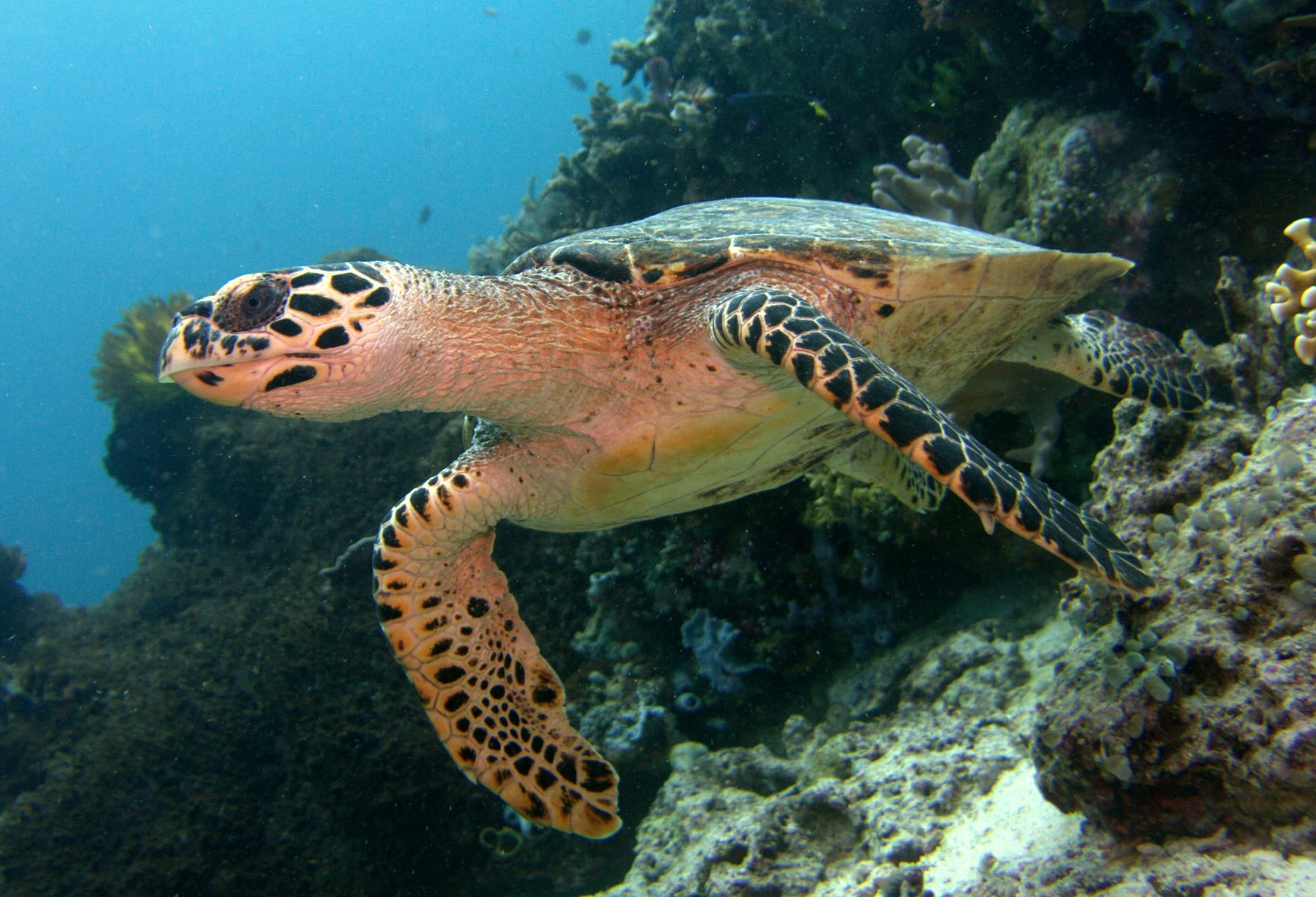
Around 8,000 nesting females remaining. The hawksbill turtle is killed for its shell, which becomes tortoiseshell jewelry and ornaments, despite the international trade ban CITES put in place in 1977. It also loses nesting beaches to coastal development and eats floating plastic it mistakes for jellyfish.
Hawksbills eat sponges, and that is the part most people miss. Sponges compete with reef-building corals for space, and hawksbills crop them back hard enough to keep reefs structurally diverse. Remove the turtles and sponges take over, coral cover drops, and the reef supports fewer fish, which matters to the coastal communities eating them. SEE Turtles, Oceanic Society, and the Tortuguero sea turtle program in Costa Rica all run nesting-beach protection.
10. Black rhinoceros
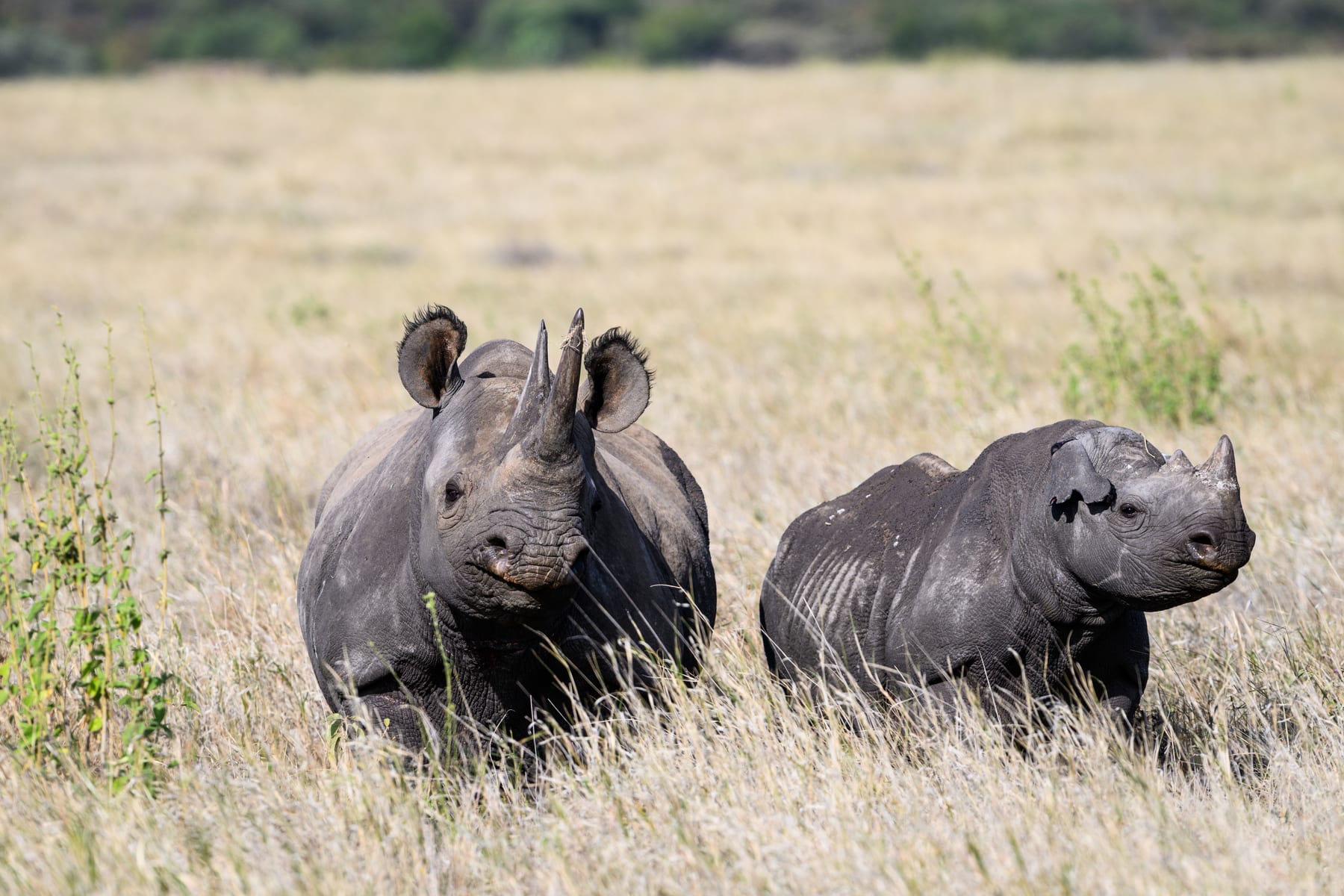
Around 6,400 remaining. The black rhinoceros is the recovery story on this list, and it is worth understanding how it happened. Poaching removed roughly 96% of the species across two decades, bottoming out near 2,400 animals in 1995. The population has since more than doubled.
It came back through three things, none of them glamorous: armed protection of individual animals, translocation to establish new breeding populations, and community conservancies that give people living alongside rhinos a financial stake in keeping them alive. That last piece is what makes the gains hold. Black rhinos are browsers, feeding on woody shrubs in a way that keeps savanna from closing into thicket, so the grazing animals around them depend on the shape they cut into the landscape. Save the Rhino International, Big Life Foundation, and Sheldrick Wildlife Trust all work on black rhino protection in Kenya and southern Africa.
Two more worth knowing
The Chinese pangolin belongs on any honest version of this list. Pangolins are the most trafficked wild mammals on Earth, taken for their scales, and a single animal eats up to 70 million insects a year, which is pest control no farmer is paying for. Save Vietnam's Wildlife and Wildlife Alliance run the rescue operations that receive confiscated pangolins.
The western lowland gorilla is Critically Endangered as well, hit by commercial hunting and by Ebola outbreaks that have killed gorillas across central Africa in numbers no anti-poaching patrol can do anything about.
What separates the ones that come back
Set these ten side by side and a pattern shows up. The species that recovered are not the most charismatic ones, and they are not the ones with the most money behind them in general terms. They are the ones where a specific organization got funded to do specific, repetitive, unglamorous work in one place for decades.
The black rhino came back because rangers protected individual animals, year after year. The California condor came back because people caught 27 birds, bred them, and then kept testing the released ones for lead poisoning forever. Neither was a campaign. Both were a job that somebody funded long enough to finish.
The vaquita has never had that. Neither, really, has the Javan rhinoceros, beyond one park's ranger force.
If you want the general version of what works rather than the specific ten, how to protect endangered species ranks the interventions by evidence, from habitat to captive breeding. Flightless birds covers the kakapo alongside the group with the worst extinction record of any birds, and turtle vs tortoise explains why that whole group is in worse shape than birds or mammals while getting a fraction of the attention.
Every organization named above has a page on Wildlife Connect with its location, the species it works with, and how to support it directly. If one of these ten animals is the reason you read this far, start there.